slow breathing

A Better Life, 30-Second Science, and the Tibetan Yoga of Breath


Reading Time: 1 min 45 sec

I hope the next 21-ish breaths are the most nourishing of your day.


4 THOUGHTS

1. A Better Life Outside of Practice

“We expand our inner presence and relaxation…and, over time, we find more and more of that inner expansion and relaxation in daily life. The same is true of doing deep meditation (more inner silence in life), yoga postures (more flexibility in life) and other yoga practices on a daily basis. It all ends up enhancing our life outside the practices. This is the real benefit of doing yoga practices, and the primary reason for doing them.”

– Yogani, Spinal Breathing Pranayama

This is true for any contemplative or relaxation practice we do. It’s not just about escaping life; it’s about creating a better life outside of practice.

2. Accessing Your Inner Silence

“I believe it’s possible for everyone to discover this silence within themselves. It is there all the time, even when we are surrounded by constant noise. Deep down in the ocean, below the waves and ripples, you can find your internal silence.”

– Erling Kagge, Silence in the Age of Noise

A way to find that? Breathe deeply (but lightly) into your belly, below the turmoil of your thinking mind. There, you can find some internal silence, which is always present but often requires a little help to access.

3. The 30-Second Science of Accessing Inner Silence

“Respiratory rhythm is one of the main oscillating rhythms of the body, which is the main source of interoceptive information for the brain…This study combined paced breathing with the threat uncertainty task to create a new experimental paradigm for the first time. The self-reported results found that slow-paced breathing was associated with lower valence and arousal, which means that compared with fast-paced breathing rate, slow-paced breathing is a beneficial intervention response to uncertain threat information.

- Luo et al. (2025), Nat. Sci. Rep.

We often assume meaningful change takes time. But this study found that even 30 seconds of slow breathing before a stressful event can reduce anticipatory anxiety. Not because the situation changed, but because the body did.

4. Travel Light

When it comes to thinking, travel light.


1 Quote

If we practice mindfulness and appreciate training in the breath, we have an incredible number of opportunities to balance the body and mind every day.”
— Anyen Rinpoche & Allison Choying Zangmo

1 GOOD BOOK

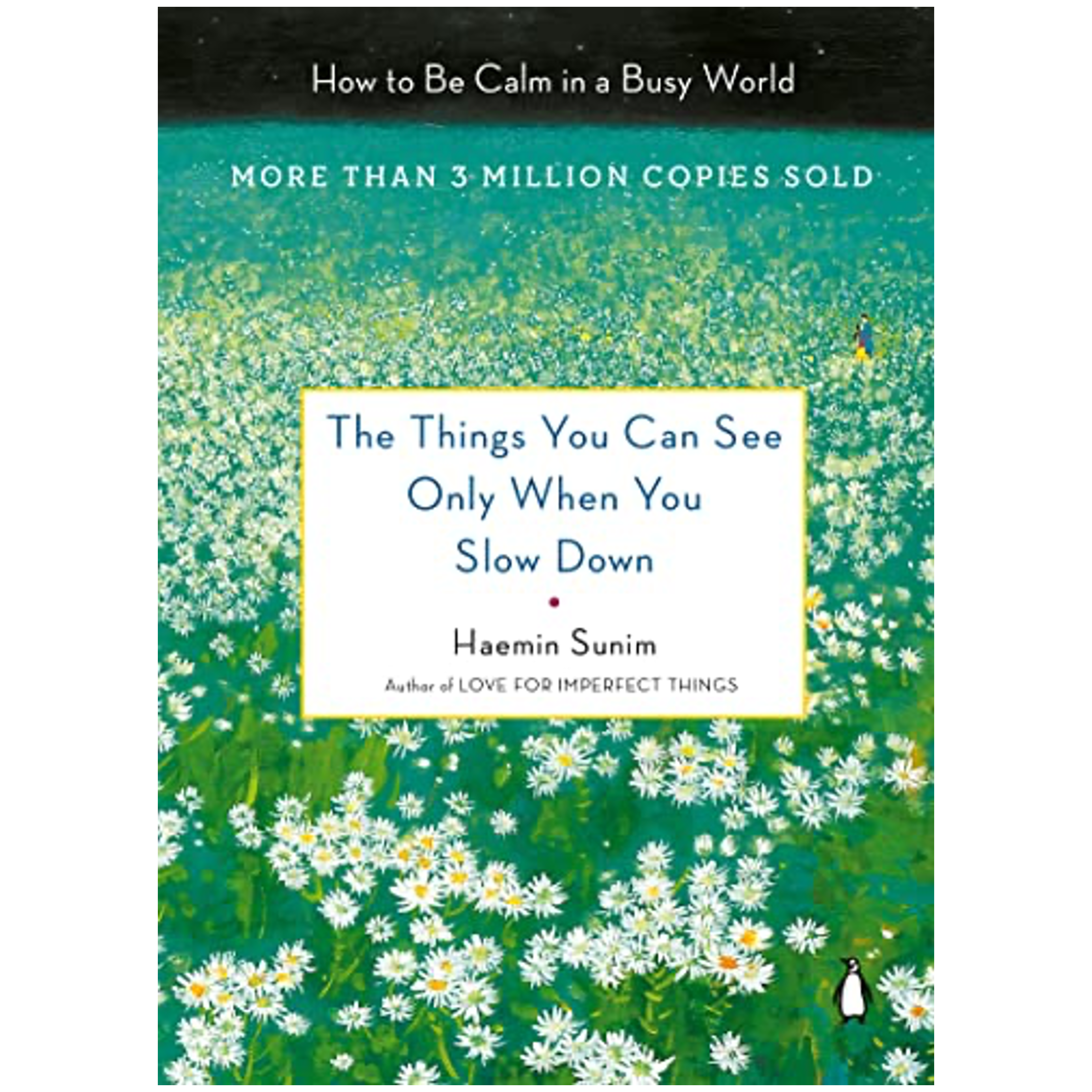
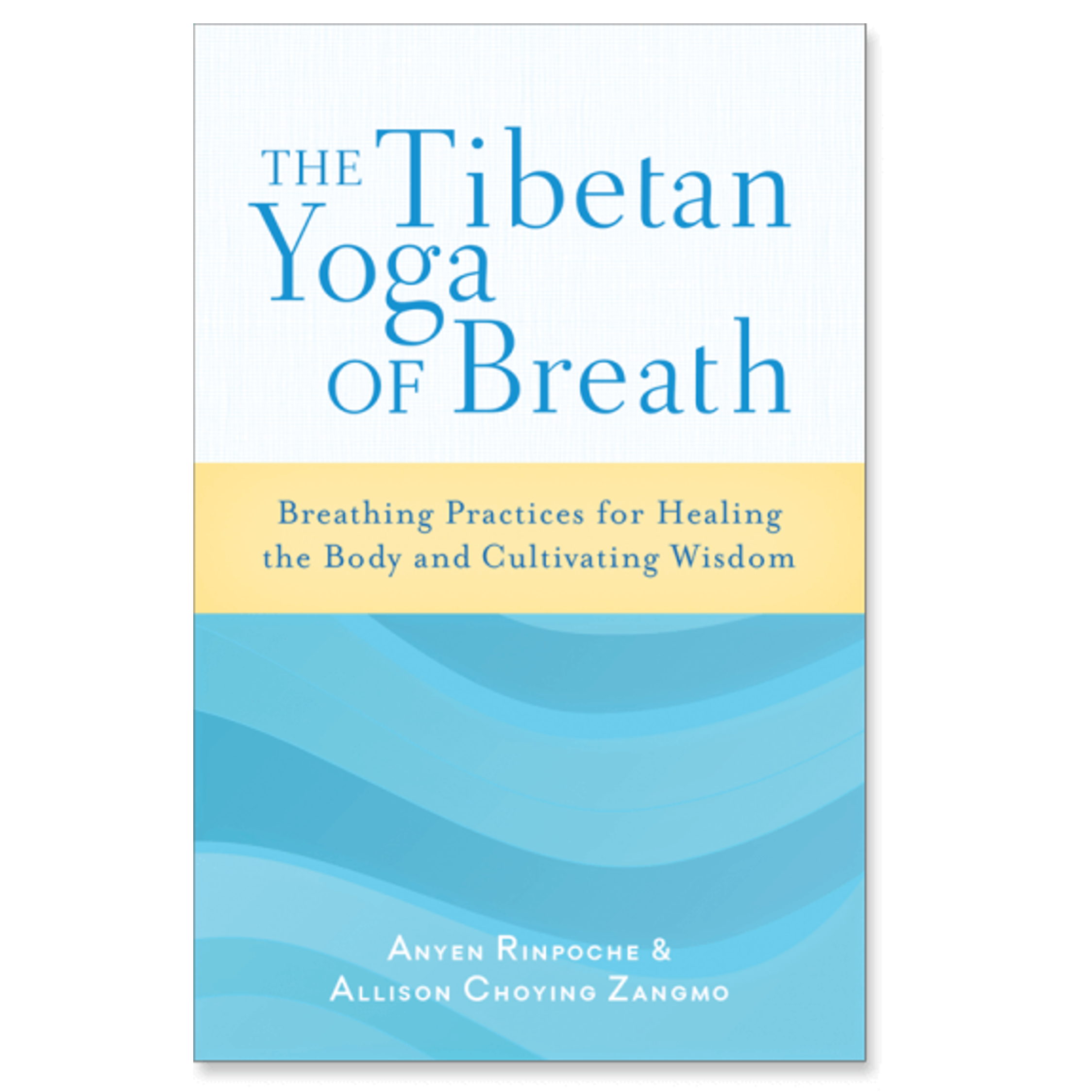
The Tibetan Yoga of Breath by Anyen Rinpoche & Allison Choying Zangmo

An excellent book on the healing power of breathing (or as they call it, “wind energy training”). It blends wisdom with practical exercises you can start using right away. I definitely recommend it.


In good breath,

Nick Heath, T1D, PhD
“Breathing is the compound interest of health & wellness.”

P.S. a daily struggle

Wisdom Meditation: Bridging the Second Gap

Wisdom Meditation is a simple, science-grounded practice designed to change how you actually live. In just 12 minutes a day, it helps you encode wisdom into your nervous system so calm, clarity, and better choices show up in real life.

Learn more here.

Treat Yourself to Less Stress & Better Breathing


Amazon Associate Disclosure

I’ve been recommending books for almost 6 years. Yet somehow, I just discovered that I could be an Amazon affiliate [face-palm]. In any case better late than never. Now, any Amazon link you click is an affiliate link. As an Amazon Associate, I earn from qualifying purchases. So, if you’d like to support my work, buying books through these links is helpful : )

* An asterisk by a quote indicates that I listened to this book on Audible. Therefore, the quotation might not be correct, but is my best attempt at reproducing the punctuation based on the narrator’s pace, tone, and pauses.
 

Glimmers over Triggers, More from Your Mind, and a Celebration of Life


Reading Time: 1 min 46 sec

I hope the next 21-ish breaths are the most nourishing of your day.


4 THOUGHTS

1. Glimmers over Triggers

“A glimmer is the opposite of a trigger; it’s any object or experience that creates a moment of unforced ease or joy. It works the same way as a negative trigger…but instead of sounding an alarm, they turn on the green light. The sight, sound, smell, taste, feel, or memory of a glimmer automatically creates a little bubble of gratitude and appreciation.”

- Martha Beck,
Beyond Anxiety

We all know certain things or situations can trigger us, sometimes for reasons we don’t even understand. But the opposite is also true: some things naturally elicit gratitude and appreciation.

Our task is to find those “glimmers” and deliberately add them to our lives—in our meditation corners, offices, rooms, etc.—so we can experience more comfort and joy each day.

2. Get the Most Out of Your Mind

“There is now enough robust science to show that mastering the simple movements needed to control the rate, depth and route by which you get air into your body can become a handy tool to steer thoughts and feelings in useful ways. Mastering this range of bodily movements can allow us to dial into the workings of the brain and the rest of the body, change the settings of both and get the very best out of the mind.”

– Caroline Williams,
Move

Nothing to add 👌

3. You Become What You Rehearse

Meditation doesn’t magically turn you into a better person, but it does make your mind malleable. What you expose your brain to in that relaxed state is what’s critical.

That’s why Wisdom Meditation is so powerful. By consistently rehearsing wisdom in that malleable state, it becomes second nature in the rest of your life. In other words, you become what you rehearse—that’s the core mechanism behind Wisdom Meditation.

If you’re curious, you can learn more here.

4. A Reminder of the Simplicity of Breathing

A large review of 29 studies on slow breathing to help chronic disease management came to a simple conclusion:

  • breathe slowly (about 5–6 breaths/min)

  • use a slightly longer exhale than inhale

  • employ nasal, abdominal breathing

  • practice about 10 minutes per day

  • getting a little human guidance helps

Hard to argue with that 😊


1 Quote

The greatest of all miracles is to be alive, and when you breathe in, you touch that miracle. Therefore, your breathing can be a celebration of life.”
— Thich Nhat Hanh

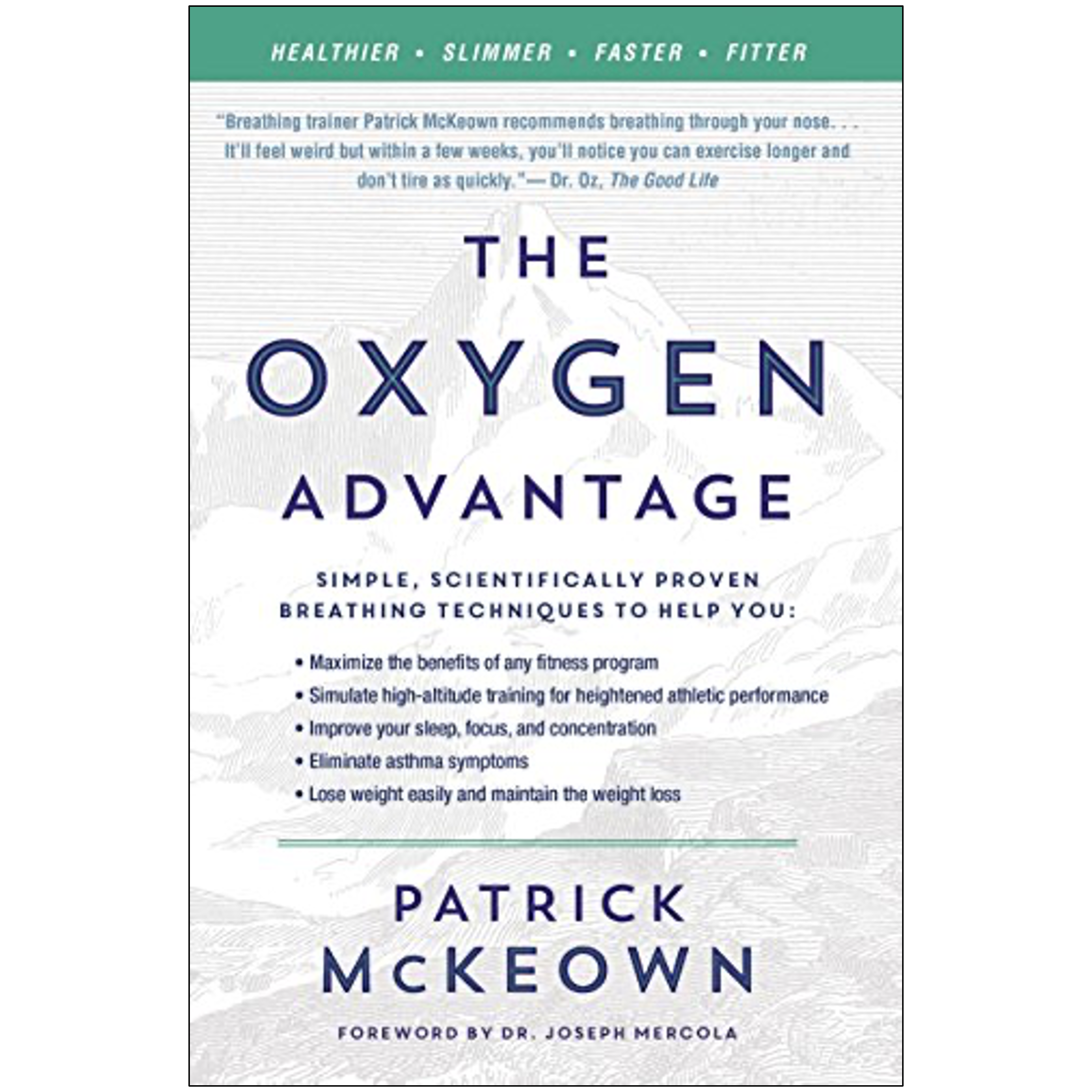
1 GOOD BOOK

The Oxygen Advantage by Patrick McKeown

This one doesn’t need much explanation. If you’ve had it on your reading (or re-reading) list, here’s a nudge to pick it up.


In good breath,

Nick Heath, T1D, PhD
“Breathing is the compound interest of health & wellness.”

P.S. this time it’ll work

Wisdom Meditation: Bridging the Second Gap

Wisdom Meditation is a simple, science-grounded practice designed to change how you actually live. In just 12 minutes a day, it helps you encode wisdom into your nervous system so calm, clarity, and better choices show up in real life.

Learn more here.

Treat Yourself to Less Stress & Better Breathing


Amazon Associate Disclosure

I’ve been recommending books for almost 6 years. Yet somehow, I just discovered that I could be an Amazon affiliate [face-palm]. In any case better late than never. Now, any Amazon link you click is an affiliate link. As an Amazon Associate, I earn from qualifying purchases. So, if you’d like to support my work, buying books through these links is helpful : )

* An asterisk by a quote indicates that I listened to this book on Audible. Therefore, the quotation might not be correct, but is my best attempt at reproducing the punctuation based on the narrator’s pace, tone, and pauses.


Universal Stress Reduction, Feeling at Ease, and No Need to Worry


Reading Time: 1 min 36 sec

I hope the next 19-ish breaths are the most nourishing of your day.


4 THOUGHTS

1. A Universal Way to Reduce Any Stress Reaction

“Every time you breathe out, your heartbeat slows a little. Exhaling taps the brakes on your fight-or-flight response so that your heart rate can’t get dangerously high. That’s why—across hundreds of human cultures and even other species—a long, slow outbreath is a universal way to begin reducing any stress reaction.

- Martha Beck,
Beyond Anxiety

Nothing to add to this one 👌

2. The Subtle Habit That Keeps Us from Feeling at Ease

“Unfortunately, the pleasure principle also makes it difficult for us to just be. In virtually every moment we’re attempting to adjust our experience, trying to hold on to pleasant moments and avoid unpleasant ones. This makes it very difficult to relax fully and feel at ease or satisfied.”

- Ronald Siegel, PsyD,
The Mindfulness Solution

Definitely guilty here. And while mindfulness doesn’t instantly (or ever completely) fix this, it does make it easier to be with how things are rather than how we wish they would be 🙏

3. Thoughts, Thinking, and Insights

  • Thoughts: What your mind produces naturally. We can’t stop them; only allow them to arise and go on their own.

  • Thinking: Engaging with thoughts. This is usually what we mean by “mind wandering,” and it’s where rumination, worry, and anxiety typically pop up.

  • Insights: Valuable thoughts. They are the spontaneous sparks of wisdom that arise without thinking.

This distinction is one of my favorite parts of my new ebook on Wisdom Meditation. In it, I explore how this simple reframe can significantly enhance how we relate to our meditation practice.

4. There Is No Need to Worry

“If there is a solution, there is no need to worry, and if there is no solution, there is no reason to worry either.”

- Matthieu Ricard,
found in The No-Nonsense Meditation Book

This quote has been said by many different people in different ways, but it’s always a welcome reminder of the futility of worrying.


1 Quote

Our capacity to control our breathing and to breathe consciously is very beneficial to the brain. That’s why I like breathing meditation so much.”
— Steven Laureys, MD

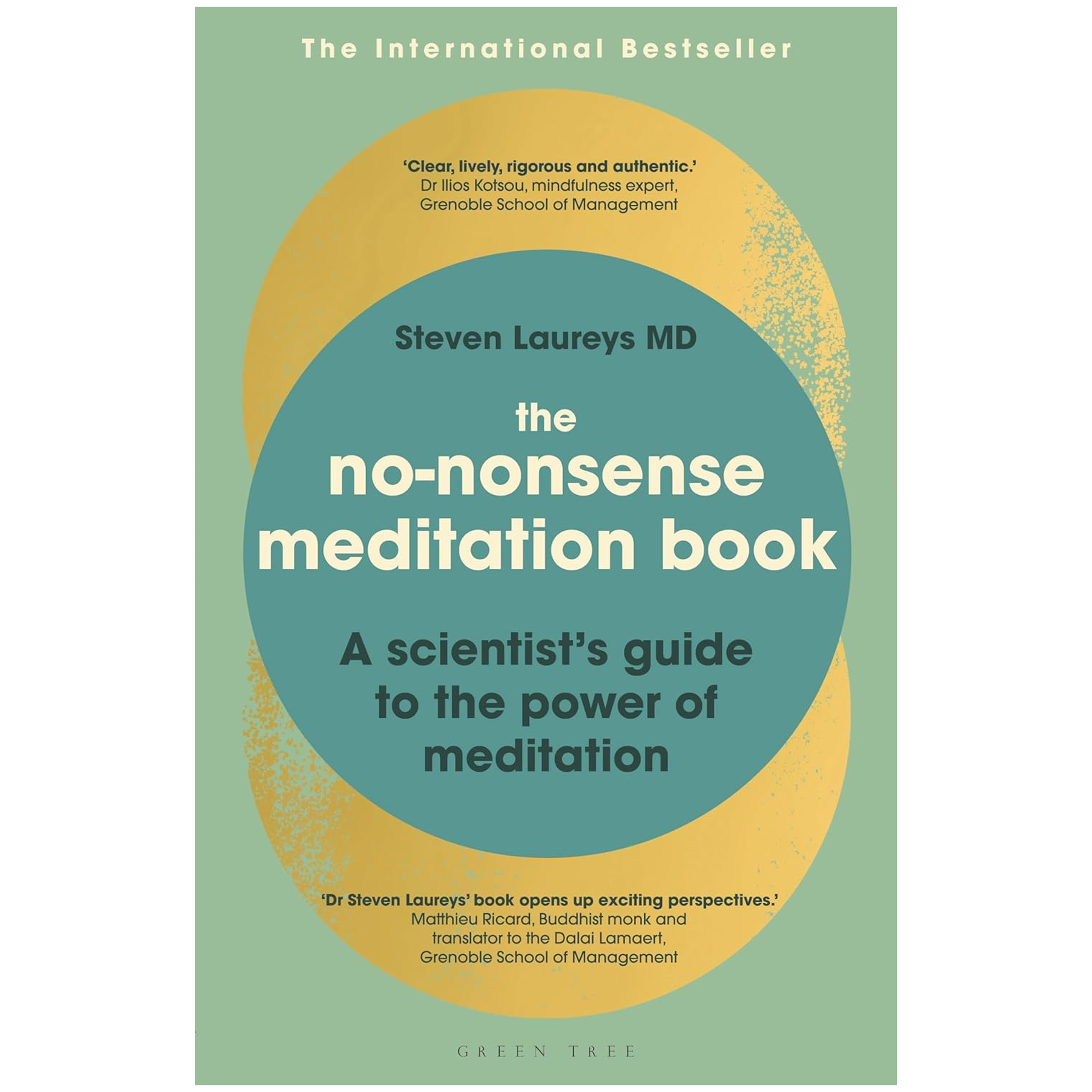
1 GOOD BOOK

The No-Nonsense Meditation Book by Steven Laureys, MD

This is a great book on the science of meditation (along with many fun anecdotes and practical suggestions). There’s even a whole chapter on breathing 😊


In good breath,

Nick Heath, T1D, PhD
“Breathing is the compound interest of health & wellness.”

P.S. inner applause

Wisdom Meditation: Bridging the Second Gap

Wisdom Meditation is a simple, science-grounded practice designed to change how you actually live. In just 12 minutes a day, it helps you encode wisdom into your nervous system so calm, clarity, and better choices show up in real life.

Learn more here.

Treat Yourself to Less Stress & Better Breathing


Amazon Associate Disclosure

I’ve been recommending books for almost 6 years. Yet somehow, I just discovered that I could be an Amazon affiliate [face-palm]. In any case better late than never. Now, any Amazon link you click is an affiliate link. As an Amazon Associate, I earn from qualifying purchases. So, if you’d like to support my work, buying books through these links is helpful : )

* An asterisk by a quote indicates that I listened to this book on Audible. Therefore, the quotation might not be correct, but is my best attempt at reproducing the punctuation based on the narrator’s pace, tone, and pauses.


Why We Want High HRV, Monk Brains, and How to Make Decisions


Reading Time: 2 min 0 sec

I hope the next 24-ish breaths are the most nourishing of your day.


4 THOUGHTS

1. Why We Want High HRV (and how to get it)

“High heart rate variability is associated with smooth, efficient prefrontal cortex activity and executive-function tasks including working memory and inhibitory control. This means that by increasing your heart rate variability, you improve your prefrontal lobe activity and with it your ability to self-regulate, inhibit negative thoughts, make objective decisions, and remember what you learn.

- Leah Lagos, Psy.D.,
Heart Breath Mind

And one of the fastest (if not the fastest) and most reliable ways to increase HRV? Slow breathing, of course 😊

2. How the Brains of Meditating Monks Give Hope

In Beyond Anxiety, Martha Beck describes how reading a single meditation study influenced her life. I’m sharing it as a powerful reminder of what contemplative practices can offer:

“Each new study I read gave me more hope, especially a study where neurologists peered into the brains of Tibetan monks who had spent years in meditation. These men, it was found, had unusually dense tissue in the brain regions associated with happiness, compassion, and calm. … In the end, my career was based less on my intellectual training than on my near-pathological conviction that every one of us can fulfill our deepest longing and make the world a better place. After I read the Tibetan monk study, this conviction grew roots so deep nothing could shake it. I was convinced I could fix my brain.”

3. How to Make Decisions Right

“Rather than recommending endless analysis, my experience and research suggest taking a limited amount of information available at the time and going ahead and choosing an option. Then, rather than worry about whether the decision was right, we should try to make it work. Look at any advantages that accrue from whatever happens, and then play it as the “right decision.” That is, don’t try to make the right decision, make the decision right.

- Ellen Langer, Ph.D.,
The Mindful Body

I’m not sure if I fully agree with this (lol), but I always appreciate viewpoints that make me pause and think. Perhaps we can never truly know whether a decision was “right,” so the better practice is to learn how to “make the decision right.” 🤔

4. The Beauty of Doing Something Daily

Here is the beauty of doing something daily: it enables us to see clearly, know deeply, and understand our world more intimately.

- Libby Delana,
Do Walk

Just an excellent reminder of the value of a daily practice, whether it’s breathing, meditation, walking, or something else you enjoy.


1 Quote

Getting more familiar and even comfortable with knowing that we don’t know is its own form of profound and healing intelligence.”
— Jon Kabat-Zinn, PhD

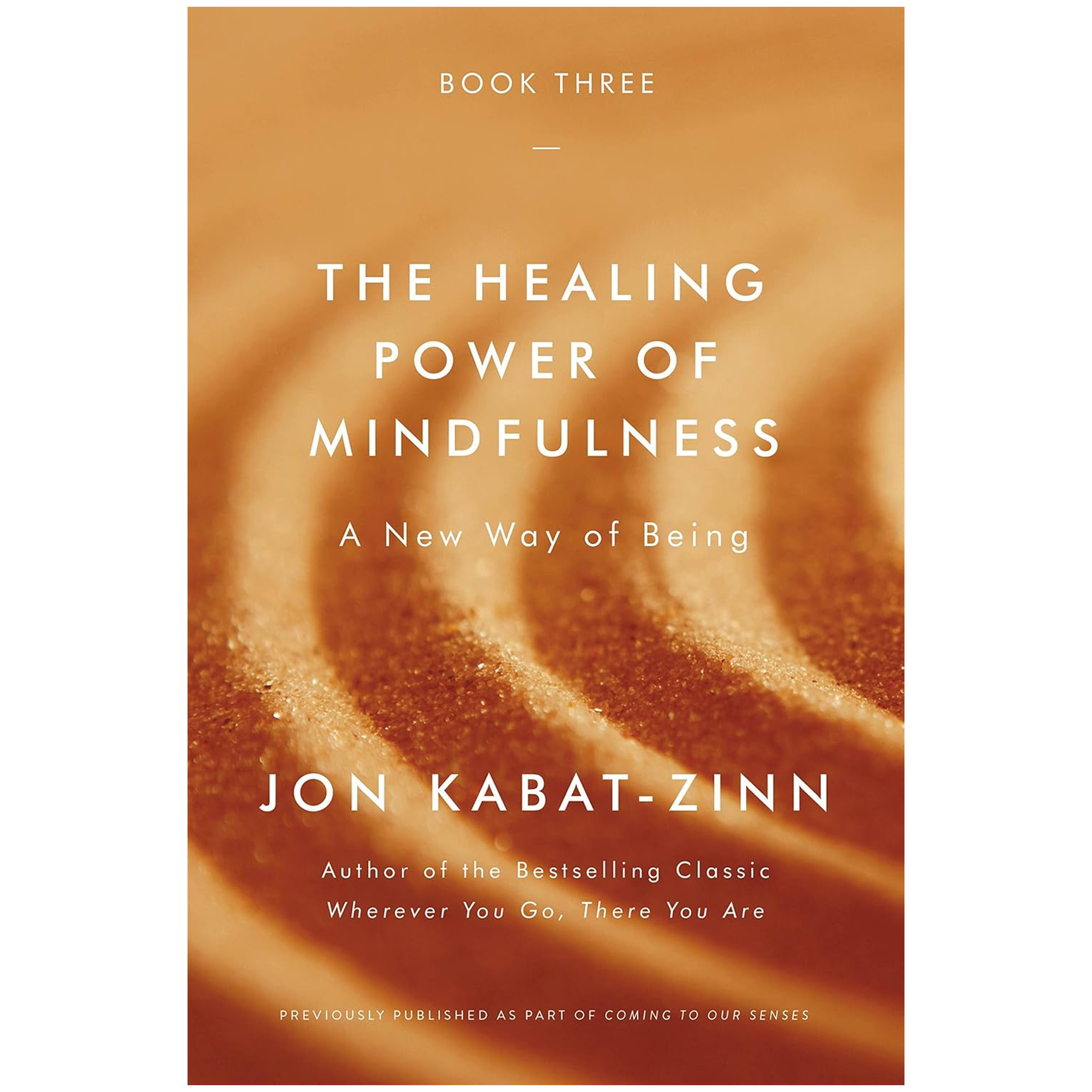
1 GOOD BOOK

The Healing Power of Mindfulness by Jon Kabat-Zinn, Ph.D.

This is another excellent mindfulness book from Kabat-Zinn. I’d still recommend Full Catastrophe Living first, but this is a great follow-up, grounded in both science and practicality.


In good breath,

Nick Heath, T1D, PhD
“Breathing is the compound interest of health & wellness.”

P.S. it would be a hit

Wisdom Meditation: Bridging the Second Gap

Wisdom Meditation is a simple, science-grounded practice designed to change how you actually live. In just 12 minutes a day, it helps you encode wisdom into your nervous system so calm, clarity, and better choices show up in real life.

Learn more here.

Treat Yourself to Less Stress & Better Breathing


Amazon Associate Disclosure

I’ve been recommending books for almost 6 years. Yet somehow, I just discovered that I could be an Amazon affiliate [face-palm]. In any case better late than never. Now, any Amazon link you click is an affiliate link. As an Amazon Associate, I earn from qualifying purchases. So, if you’d like to support my work, buying books through these links is helpful : )

* An asterisk by a quote indicates that I listened to this book on Audible. Therefore, the quotation might not be correct, but is my best attempt at reproducing the punctuation based on the narrator’s pace, tone, and pauses.


Hum for Stress, Less Negative Emotions, and Find Your Life Flow


Reading Time: 1 min 37 sec

I hope the next 19-ish breaths are the most nourishing of your day.


4 THOUGHTS

1. Humming to Reduce the Stress Response

“We ask that you stop for a moment and think about the importance of this therapeutic aspect of humming. The bottom line is that humming can reduce your heart rate and lower your blood pressure. Essentially, it can reduce your stress response. And that includes reducing all those nasty hormones associated with stress, such as cortisol.”

- Jonathan Goldman & Andi Goldman,
The Humming Effect

That’s definitely worth stopping to think about…and to practice.

2. What is Meditation Good For? (Hint: Everything)

“Because meditation elevates your base level of concentration power and because concentration power facilitates all human endeavors, the question “what's meditation good for?" has a simple answer: meditation is good for everything…Is meditation really that valuable? Yes it is, because a person's base level of concentration is, in a sense, the most valuable thing that they have.

- Shinzen Young, The Science of Enlightenment

A helpful reminder that, because it enhances our base level of concentration, meditation can help us in essentially every aspect of life.

3. How to Reduce Your Chances of Negative Emotions

“In view of the close association between respiration, ANS activity, and emotions presented, it is apparent that individuals possess the ability to alter emotional states using the voluntary control of breathing and mindset.

- Jerath et al. (2015),
Appl. Psychophysiol. Biofeedback.

This paper had a compelling finding: slow, deep breathing may reduce the body’s physiological capacity to experience negative emotions. Pretty neat stuff.

4. Finding Where Life Flows From

“Go into yourself and see how deep the place is from which your life flows.”

– Rainer Maria Rilke

Whether we’re doing a 10-minute meditation, a 100-mile run, or just taking 1 conscious breath, this is what all contemplative and physical activities have in common: We’re simply going into ourselves to see how deep the place is from which our life flows.


1 Quote

“You didn’t come into this world. You came out of it, like a wave from the ocean. You are not a stranger here.”
— Alan Watts

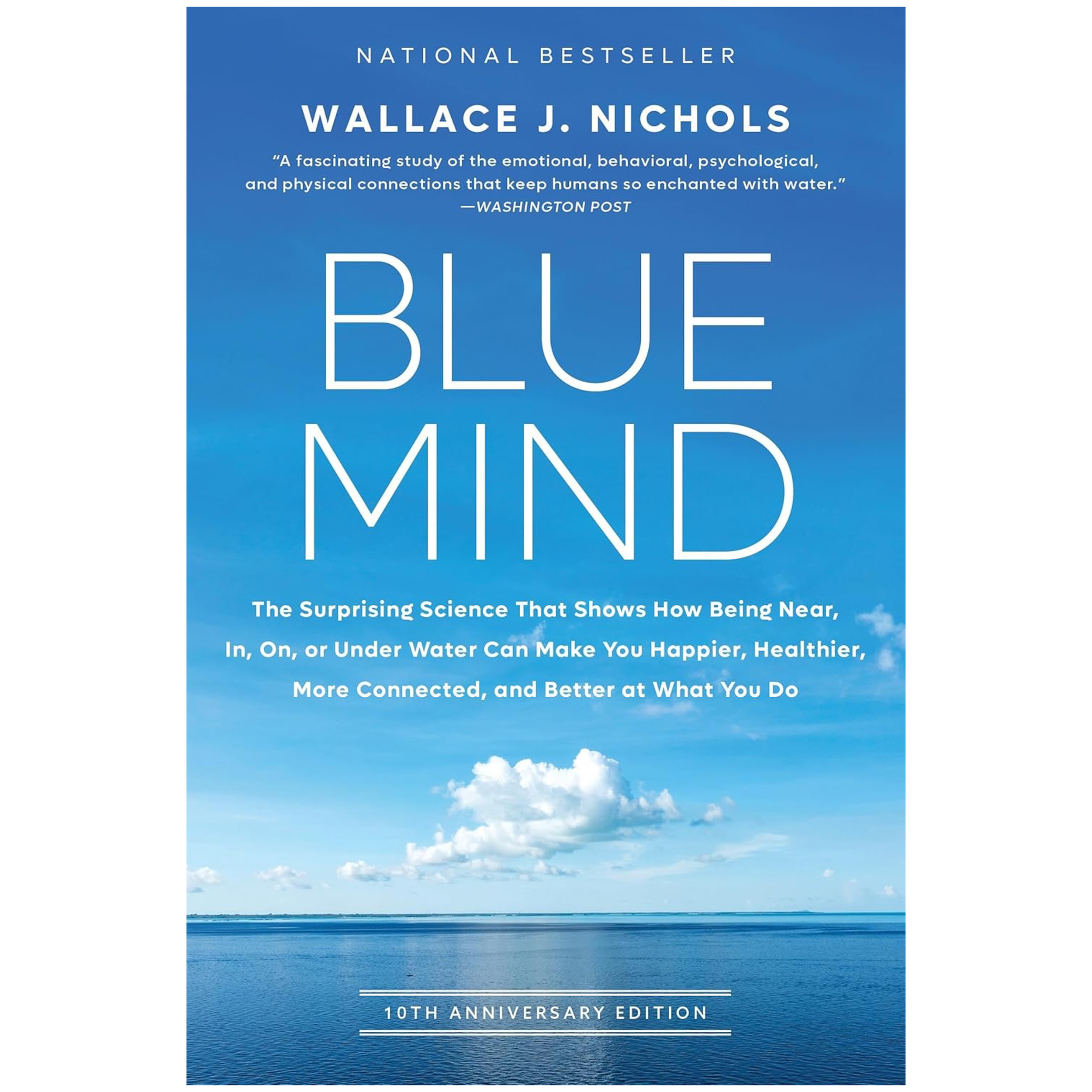
1 GOOD BOOK

Blue Mind by Wallace J Nichols

While this one isn’t about breathing or meditation per se, it’s an excellent book on the power of water (and nature more broadly) to help us naturally cultivate mindfulness. As a surfer and someone who loves the ocean, it’s one of my all-time favorites.


In good breath,

Nick Heath, T1D, PhD
“Breathing is the compound interest of health & wellness.”

P.S. new year’s resolution

Treat Yourself to Less Stress & Better Breathing


The Breathing App for Diabetes is FREE Until Jan. 1

This is the first program specifically made for people with diabetes to help manage their stress through breathing and mindfulness practices. In addition to the amazing program inside the app, we have some really neat things coming up, so sign up now!

Learn more here.


Amazon Associate Disclosure

I’ve been recommending books for almost 6 years. Yet somehow, I just discovered that I could be an Amazon affiliate [face-palm]. In any case better late than never. Now, any Amazon link you click is an affiliate link. As an Amazon Associate, I earn from qualifying purchases. So, if you’d like to support my work, buying books through these links is helpful : )

* An asterisk by a quote indicates that I listened to this book on Audible. Therefore, the quotation might not be correct, but is my best attempt at reproducing the punctuation based on the narrator’s pace, tone, and pauses.


You Can Do This Today, a New 2025 Study, and Positive Reinforcement


Reading Time: 1 min 58 sec

I hope the next 24’ish breaths are the most nourishing of your day.


4 THOUGHTS

1. Something You Can Do Today (that may really help)

A 2025 study published in Nature Scientific Reports found that just 30 seconds of slow breathing (6-second inhale, 6-second exhale) reduced heart rate and anticipatory anxiety when participants were presented with uncertainty.

As the authors said, “It may be that slow breathing prepares the individual physically and psychologically for future anxious events.”

So next time you’re waiting for something stressful, try three slow breaths. It certainly won’t solve everything, but sometimes the simplest tools are the most effective.

2. A New Study Shows that Slow Breathing Protects Against Future Stressors

“These findings highlight the practical potential of SB [slow breathing] as an accessible and cost-effective intervention for mitigating anxiety and preventing stress response escalation.”

- Frontiers in Human Neuroscience (2025)

To piggyback on #1, this study, published just 3 weeks ago, found that 5 minutes of slow breathing (4-second inhale, 6-second exhale) helped protect against future stressors.

In their words: “This highlights the potential of SB as a proactive strategy for building resilience against acute emotional challenges.” 👏

3. The Path to Peace

“The path to peace is not to pursue certainty but to relax into uncertainty. To surrender to the ebbs and flows of life and accept things as they are instead of how you think they should be. It's not about trying to force things to happen a certain way but about trusting that you will be okay no matter what happens.

- Joseph Nguyen, Don’t Believe Everything You Think

Amen to that 🙏

4. This Feeling Can Reinforce Behavior

“In my lab at Stanford some years ago, we wanted to see if using humor was an effective way to promote recycling. We rigged a recycling bin so people would hear a funny audio clip from The Simpsons every time they put something in…When people used this bin, they were surprised and amused. Some people looked for errant scraps of paper to put into the bin to hear more funny clips. Other people removed things from our bin and put them back in…A positive feeling from humor can reinforce behavior.”

- BJ Fogg, Ph.D., Tiny Habits

How good is that? It begs the question: How might we use humor and positive feelings to reinforce our breathing and/or meditation habit (or, for that matter, any habit at all)?


1 Quote

It is needful periodically to put aside the things of time so as to seek the timeless, to isolate ourselves from the outward world so as to seek an inward one.”
— Paul Brunton

1 GOOD BOOK

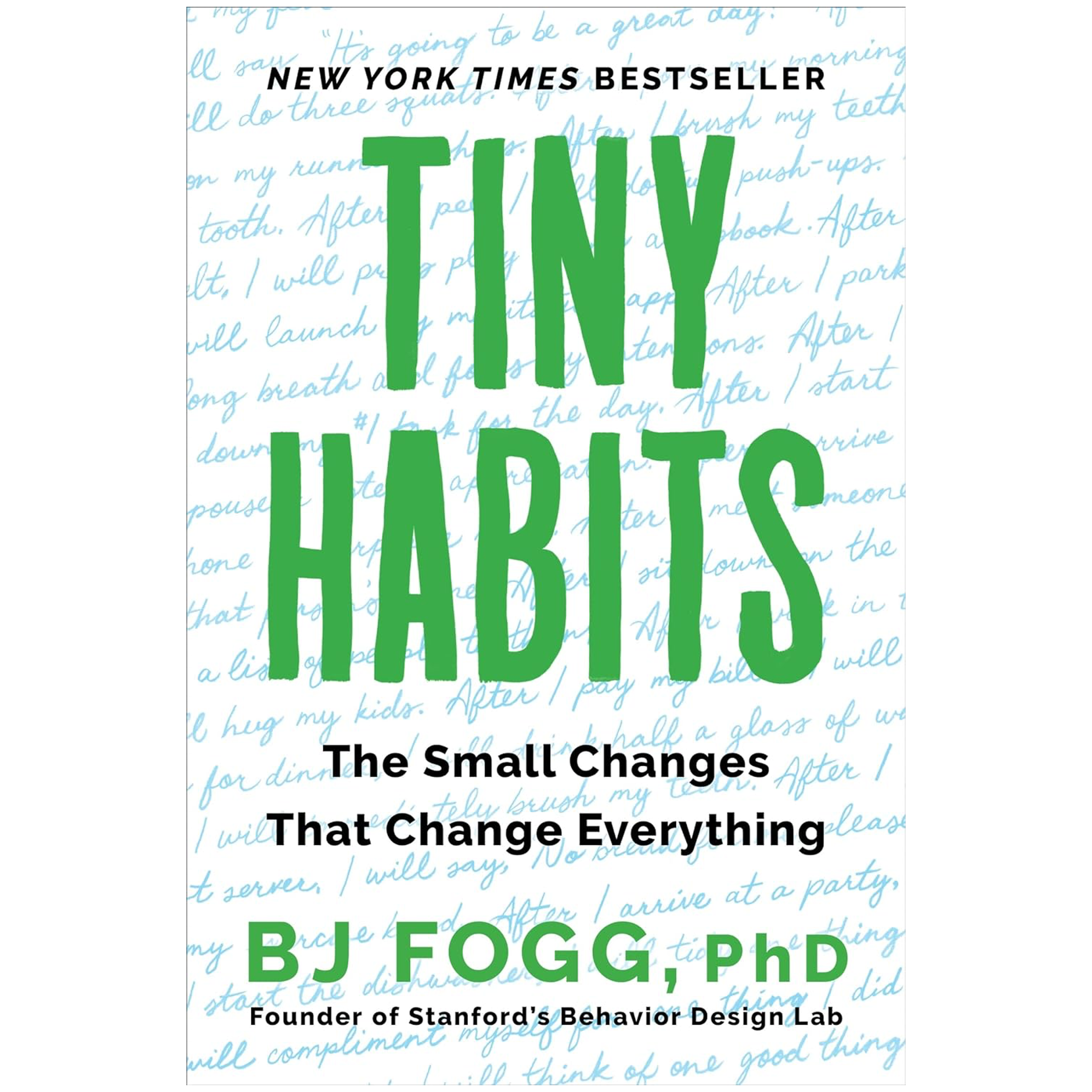
Tiny Habits by BJ Fogg, Ph.D.

This is my favorite book on habits. It truly changed my life about 4 years ago. When it comes to breathing, meditation, or anything else that makes us better, the practices are usually straightforward. The hardest part is consistency. This book makes that part easy.


In good breath,

Nick Heath, T1D, PhD
“Breathing is the compound interest of health & wellness.”

Enjoy these posts? Donate to say thanks!


P.S. hanging out as adults


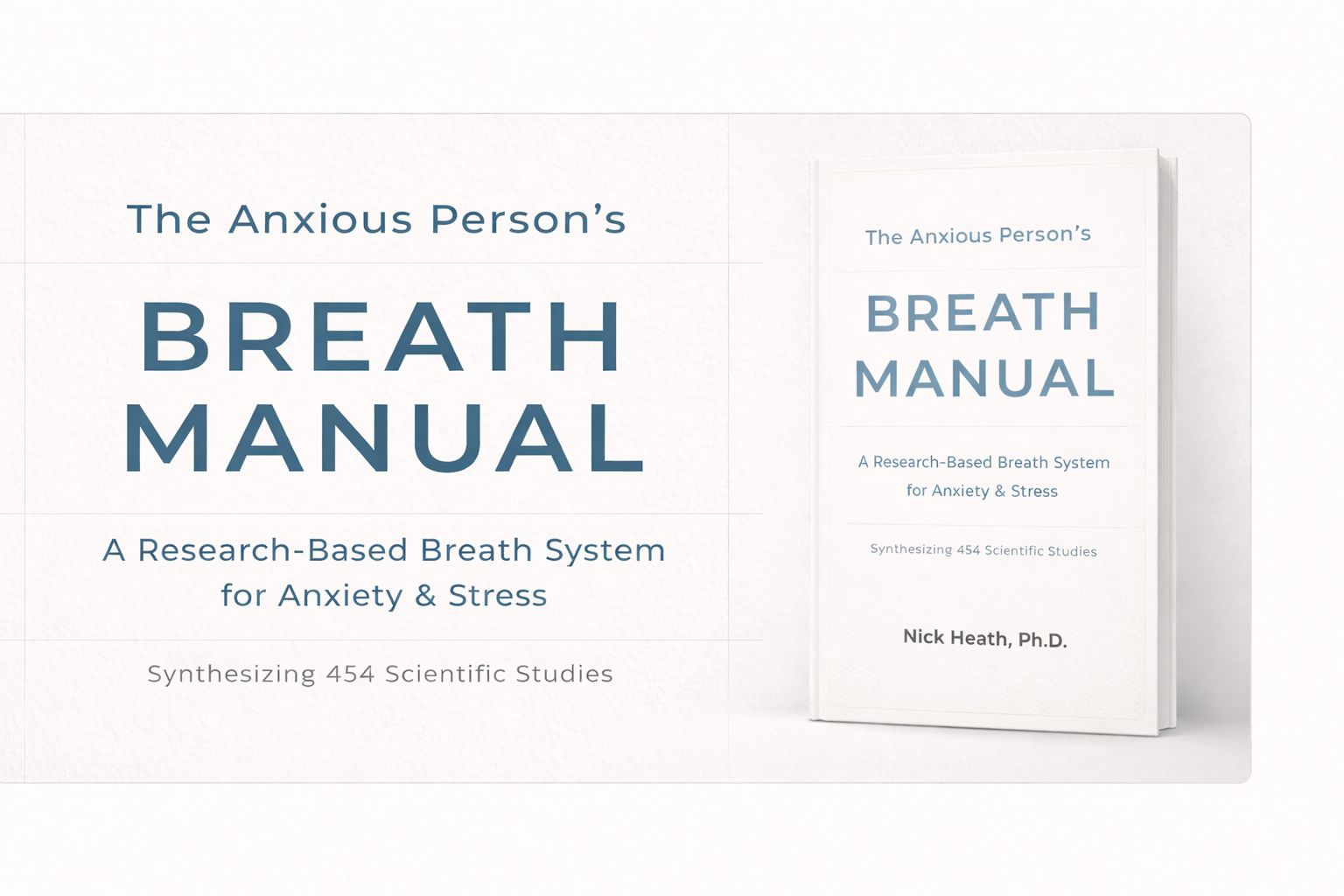
Get My New Guidebook: The Anxious Person’s Breath Manual

Science-Backed Breathing Protocols for Stress, Anxiety, and Overwhelm That Actually Work

This isn’t another “just breathe” guide. Every technique is backed by rigorous research showing that these breathing exercises:

  • Reduce anxiety as effectively as CBT

  • Activate your vagus nerve (your body’s built-in relaxation switch)

  • Work immediately but compound over time

  • Require no special equipment or meditation experience

Learn more and get the guide here.

The Breathing App for Diabetes

This is the first program specifically made for people with diabetes to help manage their stress through breathing and mindfulness practices. In addition to the amazing program inside the app, we have some really neat things coming up, so sign up now!

Learn more here.


Amazon Associate Disclosure

I’ve been recommending books for almost 6 years. Yet somehow, I just discovered that I could be an Amazon affiliate [face-palm]. In any case better late than never. Now, any Amazon link you click is an affiliate link. As an Amazon Associate, I earn from qualifying purchases. So, if you’d like to support my work, buying books through these links is helpful : )

* An asterisk by a quote indicates that I listened to this book on Audible. Therefore, the quotation might not be correct, but is my best attempt at reproducing the punctuation based on the narrator’s pace, tone, and pauses.


Breathing 101, Feel-Good Hormones, and A Book I Really Loved


Reading Time: 1 min 54 sec

I hope the next 23’ish breaths are the most nourishing of your day.


4 THOUGHTS

1. Breathing 101: The Neuroendocrine Link

1. Slow breathing activates the calming branch of the nervous system, sending signals of safety to the brain.

2. In response, the brain dampens the hormonal stress response, which lowers stress hormones like cortisol.

This is an excellent example of the neuroendocrine system at work: the breath influences the nervous system, the nervous system influences the brain, and then the brain regulates hormonal activity.

2. Worrier Gets Things Exactly Backwards

“You could say the worrier gets things exactly backwards. He’s so terrified that he might not be able to rely on his inner resources, later on, when he reaches a bridge that needs crossing, that he makes superhuman efforts to bring the future under his control right now. In fact he should devote less energy to manipulating the future, and have more faith in his capacity to handle things once the challenge actually arrives.

– Oliver Burkeman, Meditations for Mortals

This one needs no commentary from me. But I will add a slight touch of humor, which I found in Anthony de Mello’s Awareness: “Who says that worrying doesn’t help? It certainly does. Every time I worry about something, it doesn’t happen!

3. How Slow, Diaphragmatic Breathing Increases Feel-Good Hormones

“The vagus nerve is our our biggest parasympathetic nerve and the biggest place of innervation is our diaphragm. So, when we take nice, easy, deep breaths, that's going to feed back to our brain that all is good with the world. [It] increases acetylcholine and then that increases, in turn, our feel-good hormones like serotonin and dopamine. [It’s] basically a natural Prozac.”

- Michael J Stephen, MD

Here’s that neuroendocrine feedback loop (described in Thought #1) in action. And while we often talk about it “reducing stress hormones,” this is a powerful reminder that it also increases feel-good ones, too 👏

4. Constantly Somewhere Else

“But we’re constantly somewhere else. As somebody said, ‘My favorite place is somewhere else.’”

- Anthony de Mello, Awareness

Here is another insight wrapped in humor from this book. It reminds me of this opposite but equally true gem: “In truth we are always present. We only imagine ourselves to be in one place or another.” – Howard Cohn


1 Quote

Breath happens, but the curious thing is that you can get with the breath, and in getting with it, extraordinary things can happen.”
— Alan Watts

1 GOOD BOOK

Meditations for Mortals by Oliver Burkeman

I can’t recommend this one enough. Reading the introduction was my favorite part, as it felt like Burkeman was expressing thoughts I’ve had but never known how to articulate. I’ve never felt so much resonance with a book. Check it out if it sounds interesting to you!


In good breath,

Nick Heath, T1D, PhD
“Breathing is the compound interest of health & wellness.”

Enjoy these posts? Donate to say thanks!

P.S. this may be my calling

The Breathing App for Diabetes

This is the first program specifically made for people with diabetes to help manage their stress through breathing and mindfulness practices. In addition to the amazing program inside the app, we have some really neat things coming up, so sign up now!

Learn more here.


Amazon Associate Disclosure

I’ve been recommending books for almost 6 years. Yet somehow, I just discovered that I could be an Amazon affiliate [face-palm]. In any case better late than never. Now, any Amazon link you click is an affiliate link. As an Amazon Associate, I earn from qualifying purchases. So, if you’d like to support my work, buying books through these links is helpful : )

* An asterisk by a quote indicates that I listened to this book on Audible. Therefore, the quotation might not be correct, but is my best attempt at reproducing the punctuation based on the narrator’s pace, tone, and pauses.


Healing Through Breathing, Breath and E-motions, and How to Go East


Reading Time: 1 min 46 sec

I hope the next 21’ish breaths are the most nourishing of your day.


4 THOUGHTS

1. Breathing, and Energy in Motion

“So what can help us when rational thought can’t? In our cerebrally oriented life, many of us have forgotten one critical piece: the role of our body to help our mind. Because emotion is energy in motion, if we want to regain our ability to think clearly, it helps to process emotional energy through the body. And the fastest-acting way to do that is via breathing.

– Emma Seppälä, Ph.D., Sovereign

Emotion is energy in motion.” That’s so good (maybe we should spell it e-motion?). It’s a great reminder that emotions need movement and, perhaps unsurprisingly to us, that one of the best movements of all for processing them is breathing 👏

2. How We Know Slow Breathing Activates the Vagus Nerve

“The results of this study reveal that for participants at rest, respiration-driven changes in HRV power (RSA) are vagally mediated. … These findings raise the possibility that mind-body techniques that use slow breathing at rest exert their breathing-related relaxation effects through vagal mechanisms.”

Kromenacker et al. (2018)

I was revisiting this study while putting together a presentation and thought it was worth resharing. The researchers used medications to separately block the sympathetic and parasympathetic nervous systems, allowing them to isolate which branch was responsible for changes in HRV during slow breathing. It was a really neat study.

Here’s an Instagram post I made a couple years ago that summarizes its core methods and findings 🙏

3. Three Random Breathing Thoughts

Breath is both a miniature model of life and the whole of life itself.

Rather than measuring ourselves by how long we practice each day, maybe a more meaningful metric is how little we need to practice to maintain our mental and physical wellness.

The greatest skill in breathing (like in life) is knowing when to go with the flow—and when to deliberately change it.

4. Want to Go East?

“If you want to go east, don't go west.”

– Sri Ramakrishna

Just a perfect reminder that, to achieve our goals, it’s often the things we don’t do that set us in the right direction.


1 Quote

Beyond the mountains, more mountains”
— Haitian Proverb

1 GOOD BOOK

Healing Through Breathing by Eddie Stern

This is a short, practical guide to the power of breathing for healing our bodies and minds. It blends science with ancient wisdom to offer plenty of simple yet powerful advice. It also includes guided breathing to get you started. Can’t recommend it enough. (Note: It is only on Audible.)


In good breath,

Nick Heath, T1D, PhD
“Breathing is the compound interest of health & wellness.”

Enjoy these posts? Donate to say thanks!

P.S. Apologies for my delayed response

The Breathing App for Diabetes

This is the first program specifically made for people with diabetes to help manage their stress through breathing and mindfulness practices. In addition to the amazing program inside the app, we have some really neat things coming up, so sign up now!

Learn more here.


Amazon Associate Disclosure

I’ve been recommending books for almost 6 years. Yet somehow, I just discovered that I could be an Amazon affiliate [face-palm]. In any case better late than never. Now, any Amazon link you click is an affiliate link. As an Amazon Associate, I earn from qualifying purchases. So, if you’d like to support my work, buying books through these links is helpful : )

* An asterisk by a quote indicates that I listened to this book on Audible. Therefore, the quotation might not be correct, but is my best attempt at reproducing the punctuation based on the narrator’s pace, tone, and pauses.


MBSR Course, Reducing Anxiety, and a Funny Quote about Negative Feelings


Reading Time: 1 min 54 sec

I hope the next 23’ish breaths are the most nourishing of your day.


4 THOUGHTS

1. MBSR 8-Week Course Starting Soon

“Mindfulness is a way of befriending ourselves and our experience.”

- Jon Kabat-Zinn, Ph.D

My good friend, mentor, and all-around awesome human Paul Hunt is leading an 8-week Mindfulness-Based Stress Reduction (MBSR) course starting on April 15th.

MBSR is a world-renowned program that changed Paul’s life, so now he shares it out of genuine care and passion. He even offers a pay-what-you-can option to ensure finances don’t hold you back.

If you’ve ever been curious about learning MBSR, this is a perfect way to begin.

Click Here to Learn More

2. Less Caught Up in the Noise of the World

“When you’ve immersed yourself in meditation, silence, breathing, and wisdom, then you’ll find it is so much easier not to get caught up in the noise of the world, the agendas, stories, and opinions. And even when you do get caught, you’re rarely fully entangled because there’s a part of you that notices you’re getting caught. So you can extricate yourself more easily.”

– Emma Seppälä, Ph.D., Sovereign

Just a reminder that when you immerse yourself “in meditation, silence, breathing, and wisdom” (like what we do here 😊), you become naturally shielded from the world’s noise. And with that security, you find a little sense of sovereignty.

3. Slow Breathing Helps Anticipatory Anxiety

“Through slow breathing exercises, participants’ responses to the emotional stimuli of an impending uncertain threat were diminished. It may be that slow breathing prepares the individual physically and psychologically for future anxious events.

Nature Scientific Reports (2025)​

​A new study found that just 30 seconds of slow breathing helps with anticipatory anxiety—the worry we feel before something stressful actually happens. In the experiment, slow breathing lowered self-reported anxiety, reduced heart rate, and slowed brainwaves, all of which may help the mind and body better handle uncertainty 👏

4. On Other’s Actions Controlling Your Feelings

“You’d better behave as I have decided, or I shall punish myself by having negative feelings.”

- Anthony de Mellow, Awareness

Ha! So good. Let’s do our best to stop punishing ourselves for the ways others act 😊


1 Quote

It is easier to give up our material clutter than to shed our psychological baggage. Pride, ego, fear, and anger clutter our souls and minds in the same way that piles of clothes, furniture, and other belongings clutter our homes.”
— Satish Kumar

1 GOOD BOOK

Breath by Breath by Larry Rosenberg

Even if you’re not into meditation, this book is worth the read for all the great quotes, stories, and analogies about the breath. It’s one of the first “non-breathwork” breathing books I read many years ago that opened my eyes to the power of the breath as an analogy for life.


In good breath,

Nick Heath, T1D, PhD
“Breathing is the compound interest of health & wellness.”

Enjoy these posts? Donate to say thanks!

P.S. Technology has gone too far

The Breathing App for Diabetes

This is the first program specifically made for people with diabetes to help manage their stress through breathing and mindfulness practices. In addition to the amazing program inside the app, we have some really neat things coming up, so sign up now!

Learn more here.


Amazon Associate Disclosure

I’ve been recommending books for almost 6 years. Yet somehow, I just discovered that I could be an Amazon affiliate [face-palm]. In any case better late than never. Now, any Amazon link you click is an affiliate link. As an Amazon Associate, I earn from qualifying purchases. So, if you’d like to support my work, buying books through these links is helpful : )

* An asterisk by a quote indicates that I listened to this book on Audible. Therefore, the quotation might not be correct, but is my best attempt at reproducing the punctuation based on the narrator’s pace, tone, and pauses.


Breath & Anxiety, One Person, and How to Ease Your Troubles


Listen Instead of Reading

If you enjoy listening, you can subscribe to the audio version on Spotify, Apple Podcasts, and Audible so you don’t even have to look at the email 😊


Reading Time: 1 min 31 sec

I hope the next 23’ish breaths are the most nourishing of your day.


4 THOUGHTS

1. Breathing Helps with Anxiety: a Meta-Analysis

“Anxious individuals who are unable to withstand the anxiety that accompanies the possibility of something bad happening in the future may experience respiratory interventions as a means by which to control their physiology. This may generalize to a greater sense of anxiety control and self-efficacy in managing symptoms.”

- Leyro et al. (2021)

This meta-analysis found that breathing significantly improves anxiety, both immediately and over the long term, providing effects similar to the gold-standard treatment of cognitive behavioral therapy.

Check out the paper here or sign up for the Breath Learning Center to get my review and takeaways 🙏

2. It Takes Just One Person (each of us)

“Pressure is contagious, but so is good will. Just one person slowing down, one person not putting others under pressure, helps everyone else to relax too.”

- Eknath Easwaran, Take Your Time

Here’s a great reminder that when we use slow breathing, meditation, and other contemplative practices to slow down, we help those around us relax, too 🙏

3. The Effects of Focused Attention on the Body & Mind

“When one-pointed attention is strong, the nervous system kicks into a relaxed mode. Heart rate slows, metabolic rate declines, digestion picks up, and brain activity associated with worry and agitation goes into neutral. It was a major surprise for Western scientists to find that something as simple as concentration could have such profound effects on the body.”

- Mark Epstein, MD, Advice Not Given

👏👏👏

4. How to Ease Your Own Troubles

“Sharing another person’s feelings of distress need not be a downer. As Dr. Aaron Beck…has said, when you focus on someone else’s suffering, you forget your own troubles.”

— Daniel Goleman, Ph.D. & Richard Davidson, Ph.D.


1 Quote

In addition, the mental component of breath is a sense of rhythmic expansion and contraction. And I think that connects us to every other living thing because all living organisms breathe. So that same rhythm is at the center of the heart of all life.”
— Andrew Weil, MD

1 Answer

Category: The Nose

Answer: The bone & cartilage separating your two nostrils (which sometimes gets displaced) is called this.

(Cue the Jeopardy! music.)

Question: What is the nasal septum?


In good breath,

Nick Heath, T1D, PhD
“Breathing is the compound interest of health & wellness.”

P.S. beyond meditation

Breath Science & Wisdom Meditations for a Well-Lived Life

Learn to think, speak, and act in alignment with the person you want to be.

Start Today.

The Breathing App for Diabetes

This is the first program specifically made for people with diabetes to help manage their stress through breathing and mindfulness practices. In addition to the amazing program inside the app, we have some really neat things coming up, so sign up now!

Learn more here.


Amazon Associate Disclosure

I’ve been recommending books for almost 6 years. Yet somehow, I just discovered that I could be an Amazon affiliate [face-palm]. In any case better late than never. Now, any Amazon link you click is an affiliate link. As an Amazon Associate, I earn from qualifying purchases. So, if you’d like to support my work, buying books through these links is helpful : )

* An asterisk by a quote indicates that I listened to this book on Audible. Therefore, the quotation might not be correct, but is my best attempt at reproducing the punctuation based on the narrator’s pace, tone, and pauses.


Smell the Flowers, a Test, and How to Pacify the Mind


Listen Instead of Reading

If you enjoy listening, you can subscribe to the audio version on Spotify, Apple Podcasts, and Audible so you don’t even have to look at the email 😊

Audio Block
Double-click here to upload or link to a .mp3. Learn more


Reading Time: 1 min 33 sec

I hope the next 23’ish breaths are the most nourishing of your day.


4 THOUGHTS

1. There, I Have Pacified Your Mind

This passage comes from Advice Not Given by Mark Epstein, MD. It’s a Zen story about Bodhidharma, a famous Buddhist monk, and Huike, who was intent on learning from him:

“Huike says to Bodhidharma, when finally given a chance to speak to him directly, ‘My mind is anxious. Please pacify it.’

To which Bodhidharma replies, ‘Bring me your mind, and I will pacify it.’

Huike says, ‘Although I've sought it, I cannot find it.’

Bodhidharma then says, ‘There, I have pacified your mind.’”

2. Wherever You Find Yourself

“The breath accompanies you the full length of life’s road: you learn about the body, feelings, mental formations, the mind itself, and, finally, the lawfulness of impermanence and emptiness of a substantial self.”

– Larry Rosenberg, Three Steps to Awakening

This is a wonderful reminder of the far-reaching utility of the breath. No matter what you’re currently interested in—the body, emotions, the mind, the self—the breath can be a metaphor or direct tool for studying it. As Rosenberg reminds us: “Wherever you find yourself, the breath is present.” 🙏

3. Smell the Flowers; Blow Out the Candles

“Just as emotions like worry and fear can trigger the body’s stress response, what we experience physically in the body can affect our emotions. Because of this, we can often begin to quiet our worries and calm the symptoms of anxiety simply by controlling one critical body function: breathing.”

– Jennifer Tucker, Breath as Prayer

Tucker provides a simple way to apply this: “Smell the flowers; blow out the candles.” Breathe in through your nose, into your abdomen, as if smelling flowers. Then, exhale slowly through pursed lips as if blowing out candles. Use it as needed today 🙏

4. A Test for You

“Here is the test to find whether your mission on Earth is finished: if you’re alive, it isn’t.”

– Richard Bach


1 Quote

The breath is not only a source of support for the physical body; it is also a support for mental, emotional, and spiritual well-being.”
— Anyen Rinpoche &Allison Choying Zangmo

1 Answer

Category: Circulation

Answer: After being inhaled, it takes oxygen about this long to circulate throughout the body.

(Cue the Jeopardy! music.)

Question: What is around one minute?


In good breath,

Nick Heath, T1D, PhD
“Breathing is the compound interest of health & wellness.”

P.S. 1890s guy

Breath Science & Wisdom Meditations for a Well-Lived Life

Learn to think, speak, and act in alignment with the person you want to be.

Start Today.

The Breathing App for Diabetes

This is the first program specifically made for people with diabetes to help manage their stress through breathing and mindfulness practices. In addition to the amazing program inside the app, we have some really neat things coming up, so sign up now!

Learn more here.


Amazon Associate Disclosure

I’ve been recommending books for almost 6 years. Yet somehow, I just discovered that I could be an Amazon affiliate [face-palm]. In any case better late than never. Now, any Amazon link you click is an affiliate link. As an Amazon Associate, I earn from qualifying purchases. So, if you’d like to support my work, buying books through these links is helpful : )

* An asterisk by a quote indicates that I listened to this book on Audible. Therefore, the quotation might not be correct, but is my best attempt at reproducing the punctuation based on the narrator’s pace, tone, and pauses.


Blue Mindfulness, Worry & Hurry, and a Natural Way to the Heart


Listen Instead of Reading

If you enjoy listening, you can subscribe to the audio version on Spotify, Apple Podcasts, and Audible so you don’t even have to look at the email 😊


Reading Time: 1 min 49 sec

I hope the next 27’ish breaths are the most nourishing of your day.


4 THOUGHTS

1. Blue Mindfulness

“What science is also revealing is that there’s an additional simple, watery means to mindfulness. Indeed, think of it as Blue Mindfulness.”

– Wallace J Nichols, Blue Mind

This refers to the idea that being around water (and nature in general) can invoke mindfulness. And even if you can’t make it into nature, it turns out that just listening to the sound of water can elicit some of its benefits.

So, this is your nudge to get out into nature or put on some ocean noises during your next breathing or meditation practice to get a little extra “blue mindfulness” 😊

2. A Water Breathing Walk

“Importantly, rain washes away the vestiges of pollution. Air is always cleaner during and immediately after a downpour…As rain tumbles through the atmosphere, each drop attracts hundreds of pollutant particles…Leaving the air bracingly fresh, scrubbed clean.”

- Annabel Streets, 52 Ways to Walk

I’ve shared this one before, but it felt right to re-share after the previous thought. Consider getting out and breathing some freshly cleaned air after the next rain—it’s an effortless “breathing exercise” 😊

3. Why Worry Goes With Hurry

“Worry goes with hurry because people in a hurry don’t have time to think clearly and make clear decisions, so they are always worried about results. … If you slow down enough to think clearly and act wisely, you have no need to worry because you know you are doing your best.”

– Eknath Easwaran, Original Goodness

One way to slow down enough to think clearly and act wisely? Slow, mindful breathing, which slows body and mind, thus reducing worry.

***

P.S. Of course, thinking clearly and acting wisely doesn’t mean we’ll make perfect decisions. It just means we won’t have to worry as much because we’ll know we’re doing our best with what we have 🙏

4. Some Advice to Follow (for the rest of our lives)

“Receive wisdom skillfully. Try it on for size and see how it fits. Incorporate what’s useful. Let go of the rest. And no matter how credible the source, test and tune in to yourself to discover what works for you.”

– Rick Rubin, The Creative Act

Ironically, that advice goes for this passage, too 😊


1 Quote

You know that our breathing is the inhaling and exhaling of air. The organ which serves for this is the lungs which lie round the heart. Thus breathing is a natural way to the heart.”
— Nicephorus the Solitary

1 Answer

Category: Synchronization

Answer: This refers to the measurement of the interaction between lungs and the heart during sleep.

(Cue the Jeopardy! music.)

Question: What is cardiopulmonary coupling?


In good breath,

Nick Heath, T1D, PhD
“Breathing is the compound interest of health & wellness.”

P.S. We didn’t think everyone would bring a bag!

Breath Science & Wisdom Meditations for a Well-Lived Life

Learn to think, speak, and act in alignment with the person you want to be.

Start Today.

The Breathing App for Diabetes

This is the first program specifically made for people with diabetes to help manage their stress through breathing and mindfulness practices. In addition to the amazing program inside the app, we have some really neat things coming up, so sign up now!

Learn more here.


Amazon Associate Disclosure

I’ve been recommending books for almost 6 years. Yet somehow, I just discovered that I could be an Amazon affiliate [face-palm]. In any case better late than never. Now, any Amazon link you click is an affiliate link. As an Amazon Associate, I earn from qualifying purchases. So, if you’d like to support my work, buying books through these links is helpful : )

* An asterisk by a quote indicates that I listened to this book on Audible. Therefore, the quotation might not be correct, but is my best attempt at reproducing the punctuation based on the narrator’s pace, tone, and pauses.


Positive Stress, Open Heart, and a Poor Host for Disease


Listen Instead of Reading

If you enjoy listening, you can subscribe to the audio version on Spotify, Apple Podcasts, and Audible so you don’t even have to look at the email 😊


Reading Time: 1 min 29 sec

I hope the next 22’ish breaths are the most nourishing of your day.


4 THOUGHTS

1. Slow Breathing as a Positive Stressor

“Slow breathing is, in fact, a type of positive stress in and of itself, because you are making an autonomic function of your body intentional…sometimes, as you might notice, your nervous system might resist a little to the changes you are suggesting, because it is not used to being told what to do.”

– Eddie Stern, Healing Through Breathing

I love this shift in perspective. It reminds us that when we teach or practice slow breathing, there might be resistance. That’s normal. But as Eddie also says, that tension “will melt away with time, practice, patience, and a gentle approach to slow breathing.” 👏

2. An Important Thing to Remember in Learning Breath Practices

“In learning breath practices the most important thing to remember is to relax. … Self-judgment adds another layer of stress. The less you judge yourself, the easier it will be to relax and experience the benefits … Try not to evaluate or judge what is happening. Just go with it.”

- Richard Brown, MD, and Patricia Gerbarg, MD

This reminds me of another gem from another MD—Herbert Benson—discussing the relaxation response: “The less you worry about the results, the better. Just let it happen.” 🙏

3. A Poor Host for Disease

“…this is one of the grandest secrets of health…Research evidence today suggests that emotional immunity to negative states of mind may well be linked to physical immunity, even resistance to disease. A person who is even minded, who doesn’t get shaken if people speak ill of him or excited when they praise her to the skies – such a person, I submit, is a poor host for disease.”

– Eknath Easwaran, Original Goodness

Of course, this doesn’t literally mean we’ll never get sick or that all our ailments will suddenly vanish if we’re even minded. But, I love this idea of training our minds to be steadier—through meditation and breathing—so we can at least become “a poor host for disease.” 🙏

4. An Open Heart to Have Open Eyes

“Ancient meditation texts describe compassion and mindfulness as two wings of a bird—emphasizing that we need an open heart to have open eyes.

- Ronald Siegel, Psy.D., The Mindfulness Solution


1 Quote

This is the deepest paradox in all of meditation: we want to get somewhere—we wouldn’t have taken up the practice if we didn’t—but the way to get there is just to be fully here.”
— Larry Rosenberg

1 Answer

Category: Contagious Breathing

Answer: One study found that our brains responds to the sound of this “breathing exercise” by preparing our facial muscles to join in.

(Cue the Jeopardy! music.)

Question: What is laughter?


In good breath,

Nick Heath, T1D, PhD
“Breathing is the compound interest of health & wellness.”

P.S. me but at my breath memes

Breath Science & Wisdom Meditations for a Well-Lived Life

Learn to think, speak, and act in alignment with the person you want to be.

Start Today.

The Breathing App for Diabetes

This is the first program specifically made for people with diabetes to help manage their stress through breathing and mindfulness practices. In addition to the amazing program inside the app, we have some really neat things coming up, so sign up now!

Learn more here.


Amazon Associate Disclosure

I’ve been recommending books for almost 6 years. Yet somehow, I just discovered that I could be an Amazon affiliate [face-palm]. In any case better late than never. Now, any Amazon link you click is an affiliate link. As an Amazon Associate, I earn from qualifying purchases. So, if you’d like to support my work, buying books through these links is helpful : )

* An asterisk by a quote indicates that I listened to this book on Audible. Therefore, the quotation might not be correct, but is my best attempt at reproducing the punctuation based on the narrator’s pace, tone, and pauses.


Five Minutes, How to Heal the Mind, and 15 versus 300


Listen Instead of Reading

If you enjoy listening, you can subscribe to the audio version on Spotify, Apple Podcasts, and Audible so you don’t even have to look at the email 😊


Reading Time: 1 min 29 sec

I hope the next 22’ish breaths are the most nourishing of your day.


4 THOUGHTS

1. The Entire Purpose of the Human Brain

“The entire purpose of the human brain is to produce movement. Movement is the only way we have of interacting with the world.”

– Daniel Wolpert, Ph.D., from The Joy of Movement

And the most fundamental movement the brain produces to interact with the world? The movement of air—our breathing 😊

2. Five Minutes for Meaningful Change

“The lack of significant association between effectiveness and session durations >= 5 min indicates that any session duration beyond 5 min can be effective…simply engaging in a breathing practice provides benefits, with sessions as short as 5 min yielding comparable benefits to longer sessions.”

Bentley et al. (2023), Brain Sciences

This was the most surprising yet welcome result of this excellent paper: We only need five minutes of slow breathing practice to see significant improvements in stress and anxiety.

Of course, longer sessions can have different benefits. But if our goal is lowering stress (or we’re short on time), we can be pretty confident that even five minutes will make a meaningful difference in our day 🙏

3. It Isn’t Really a Wonder

“There are quite a few validated, scientific findings that suggest that controlled breathing has a wide range of beneficial effects…This makes a lot of sense…it isn’t really a wonder that the thing that keeps us alive also impacts how we experience life.”

- Eddie Stern, Healing Through Breathing

“It isn’t really a wonder that the thing that keeps us alive also impacts how we experience life.” That’s so good, so obvious, and so logical, which is why it’s so easy to overlook 👏

4. A House a Home, a Cup a Drink

Like how the space inside a house makes it a home, or the emptiness within a cup makes it useful for drinking, it is the breath inside the body that makes it so remarkable for living.


1 Quote

Your mind cannot heal without laughter.”
— Catherine Rippenger Fenwick

1 Answer

Category: The Best Breathing Exercise

Answer: Children do this about 300-400 times a day while adults only do it about 15 times a day.

(Cue the Jeopardy! music.)

Question: What is laugh?


In good breath,

Nick Heath, T1D, PhD
“Breathing is the compound interest of health & wellness.”

P.S. three day recovery period

Breath Science & Wisdom Meditations for a Well-Lived Life

Learn to think, speak, and act in alignment with the person you want to be.

Start Today.

The Breathing App for Diabetes

This is the first program specifically made for people with diabetes to help manage their stress through breathing and mindfulness practices. In addition to the amazing program inside the app, we have some really neat things coming up, so sign up now!

Learn more here.


Amazon Associate Disclosure

I’ve been recommending books for almost 6 years. Yet somehow, I just discovered that I could be an Amazon affiliate [face-palm]. In any case better late than never. Now, any Amazon link you click is an affiliate link. As an Amazon Associate, I earn from qualifying purchases. So, if you’d like to support my work, buying books through these links is helpful : )

* An asterisk by a quote indicates that I listened to this book on Audible. Therefore, the quotation might not be correct, but is my best attempt at reproducing the punctuation based on the narrator’s pace, tone, and pauses.


Breathing Guidelines, Free Sci 411, and How to Make Tomorrow Good


Listen Instead of Reading

If you enjoy listening, you can subscribe to the audio version on Spotify, Apple Podcasts, and Audible so you don’t even have to look at the email 😊


Enjoy These Posts?

Donate to support my research.


Reading Time: 1 min 31 sec

I hope the next 23’ish breaths are the most nourishing of your day.


4 THOUGHTS

1. Practical Breathing Guidelines and a Free Science 411

“This knowledge can and should provide a sense of freedom for individual practitioners and program developers alike in tailoring programs to meet their needs for stress reduction effectiveness.”

Bentley et al. (2023), Brain Sciences

That sentence came near the end of an incredible study led by HHPF that was published in Brain Sciences. It’s one of the most important breath studies published to date.

In fact, it’s so significant (especially if you’re a breath coach) that I have made my Science 411 of the paper free to everyone. Click here to read or listen to it. I hope you find it helpful 🙏

2. Can Only Add Value to Your Practice

Although not necessary, adding a deeper meaning to each breath—for example, cultivating awareness that air literally sustains all of life—can only add value to your practice.

3. Why Slow Breathing Naturally Cultivates Awareness

“The pace of our breathing influences many aspects of our lives including our bodily rhythms, emotions, and mood, and so a slow and deliberate breathing pattern can allow for a slower-paced and more aware lifestyle.”

- Eddie Stern, Healing Through Breathing

This is one reason why, even without trying, slow breathing naturally cultivates mindfulness. It slows our bodies, minds, and emotions, allowing us to more easily bring awareness into our daily living 🙏

4. How to Make Tomorrow Good

“If you live today completely in love—hating no one, hurting no one, serving all—then tomorrow has to be good, whatever comes.”

– Eknath Easwaran, Original Goodness

After reading this, a new goal I have is to use my breathing and wisdom practices to live like this daily daily (even if only for a few minutes at a time—baby steps, lol). I hope you’ll join me 🙏


1 Quote

When you blow a whistle or a bubble or a horn, it is followed by an echo or a pop or a song.

Listen.

For this is the ballad of your own breathing.”
— Rebecca Kai Dotlich

1 Answer

Category: Breathing and Movement

Answer: The synchronization of breathing with stepping that occurs in many vertebrates is referred to as this.

(Cue the Jeopardy! music.)

Question: What is locomotor-respiratory coupling (LRC)?


In good breath,

Nick Heath, T1D, PhD
“Breathing is the compound interest of health & wellness.”

P.S. frankly that is none of my business

Nurture Your True Self

Everything you read in this newsletter comes from the Breath Learning Center. So, if you enjoy this newsletter, check it out. It’s cheap and full of life-changing wisdom and practices for discovering your true self. Start Today.

The Breathing App for Diabetes

This is the first program specifically made for people with diabetes to help manage their stress through breathing and mindfulness practices. In addition to the amazing program inside the app, we have some really neat things coming up, so sign up now!

Learn more here.


Amazon Associate Disclosure

I’ve been recommending books for almost 6 years. Yet somehow, I just discovered that I could be an Amazon affiliate [face-palm]. In any case better late than never. Now, any Amazon link you click is an affiliate link. As an Amazon Associate, I earn from qualifying purchases. So, if you’d like to support my work, buying books through these links is helpful : )

* An asterisk by a quote indicates that I listened to this book on Audible. Therefore, the quotation might not be correct, but is my best attempt at reproducing the punctuation based on the narrator’s pace, tone, and pauses.


My Ghostwriter, Cost-Free, and the Best Gift We Can Give Others


Listen Instead of Reading

If you enjoy listening, you can subscribe to the audio version on Spotify, Apple Podcasts, and Audible so you don’t even have to look at the email 😊


Enjoy These Posts?

Donate to support my research.


Reading Time: 1 min 32 sec

I hope the next 23’ish breaths are the most nourishing of your day.


4 THOUGHTS

1. Universally Accessible, Scalable, and Cost-Free

“Breathing practices, when used in isolation, have the advantage of being universally accessible, scalable, and cost-free. They are not limited by access to healthcare services nor burdened by side effects and put potential treatment tools in the hands of the individual.”

Bentley et al. (2023), Brain Sciences

That’s so good. I have nothing to add but a few of these 👏👏👏

2. Breathing, Mental States, and Longevity

“All creatures consume vital energy. In the ancient Hindu tradition, it is said that we come into life with a given supply of this energy, enough to power a certain number of breathing cycles. …

If this theory is true, it may help to explain why these ancient sages claim a close connection between mental states and longevity. Our breathing rhythm, the measure of how fast our reserves of vital energy are being consumed, is regulated in part by our state of mind. Security, compassion, patience, forgiveness – all these are accompanied, if you observe closely, by a relatively slow breathing rhythm and heart rate. Positive states of mind like these conserve energy and lengthen the life span, leaving a reserve of resilience and resistance for facing challenges.”

– Eknath Easwaran, Original Goodness

3. Ghostwriter

Breathing is the ghostwriter of our lives, subtly influencing our mental states, our energy and outlook, and our overall sense of connection and belonging in this world.

4. Now as I Understand Things Properly

“A Zen monk said, ‘Before I began to practice, mountains were mountains, and rivers were rivers. During many years of practice, mountains stopped being mountains and rivers stopped being rivers. Now as I understand things properly, mountains are mountains, and rivers are rivers.’”

- Thich Nhat Hanh


1 Quote

The only thing we have to bring to community is ourselves, so the contemplative process of recovering our true selves in solitude is never selfish. It is ultimately the best gift we can give to others.”
— Parker Palmer

1 Answer

Category: The Diaphragm

Answer: Several factors, including a small muscle fibre size and abundance of capillaries, make the diaphragm less susceptible to this, allowing it to work continuously.

(Cue the Jeopardy! music.)

Question: What is fatigue?


In good breath,

Nick Heath, T1D, PhD
“Breathing is the compound interest of health & wellness.”

P.S. I had 33 open while writing this email

Nurture Your True Self

Everything you read in this newsletter comes from the Breath Learning Center. So, if you enjoy this newsletter, check it out. It’s cheap and full of life-changing wisdom and practices for discovering your true self. Start Today.

The Breathing App for Diabetes

This is the first program specifically made for people with diabetes to help manage their stress through breathing and mindfulness practices. In addition to the amazing program inside the app, we have some really neat things coming up, so sign up now!

Learn more here.


Amazon Associate Disclosure

I’ve been recommending books for almost 6 years. Yet somehow, I just discovered that I could be an Amazon affiliate [face-palm]. In any case better late than never. Now, any Amazon link you click is an affiliate link. As an Amazon Associate, I earn from qualifying purchases. So, if you’d like to support my work, buying books through these links is helpful : )

* An asterisk by a quote indicates that I listened to this book on Audible. Therefore, the quotation might not be correct, but is my best attempt at reproducing the punctuation based on the narrator’s pace, tone, and pauses.


Movement, Heart and Lung Vacation, and My Teacher is Best


Listen Instead of Reading

If you enjoy listening, you can subscribe to the audio version on Spotify, Apple Podcasts, and Audible so you don’t even have to look at the email 😊


Enjoy These Posts?

Donate to support my research.


Reading Time: 1 min 34 sec

I hope the next 24’ish breaths are the most nourishing of your day.


4 THOUGHTS

1. The Most Empirically Supported Way

“The most empirically supported way that contemplative practices confer their psychological and physiological benefits is by lowering threat arousal through shifting the autonomic nervous system to parasympathetic dominance via slowed and/or regulated breathing.

- Crosswell et al. (2024), Psychological Review

Of course, contemplative practices go beyond breathing, drawing upon mind and body to uniquely benefit each person who practices.

But, this is a powerful scientific statement. It reminds us that because breath is both our spirit—the essence of our being—and our direct connection to the nervous system, it plays a key role (intentionally or unintentionally) in all contemplative practice 🙏

2. Give Your Heart and Lungs a Vacation by Practicing This

“In other words, patience is not only a mental virtue; it is an asset even for physical health. I’m sure you are aware of the way your heart races when you get impatient. Perhaps you have noticed, too, that your breathing becomes faster and more shallow. Doesn’t it seem reasonable that if you can strengthen your patience to such a degree that other people’s behavior never upsets you, your heart, lungs, and nervous system will be on vacation?”

– Eknath Easwaran, Original Goodness

That does seem reasonable : ) Here’s to cultivating a little more patience so that we may give our hearts, lungs, and nervous systems a vacation every day 🙏

3. Movement

Physical activity moves your body.

A breath practice moves your spirit.

And reading timeless wisdom moves your soul.

They all need movement to stay energized and robust.

4. My Teacher is the Best

“One Zen student said, ‘My teacher is the best. He can go days without eating.’

The second said, ‘My teacher has so much self-control, he can go days without sleeping.’

The third said, ‘My teacher is so wise that he eats when he’s hungry and sleeps when he’s tired.’”


1 Quote

When we begin to take up breathing practices, we temporarily make an involuntary, life-sustaining function voluntary, and in that can make dramatic shifts to our state of mind and the state of our nervous system.”
— Eddie Stern

1 Answer

Category: The Diaphragm

Answer: To facilitate communication of vital information, the diaphragm has three major ones of these.

(Cue the Jeopardy! music.)

Question: What are three major openings?


In good breath,

Nick Heath, T1D, PhD
“Breathing is the compound interest of health & wellness.”

P.S. worrying works!

Nurture Your True Self

“Sometimes you have to play a long time to be able to play like yourself.”

– Miles Davis

Learn to think, speak, and act in alignment with the person you want to be. Start Today.

P.S. Along with the pay-what-you-can option, I also just added a 2-day pass to make it more accessible 🙏

The Breathing App for Diabetes

This is the first program specifically made for people with diabetes to help manage their stress through breathing and mindfulness practices. In addition to the amazing program inside the app, we have some really neat things coming up, so sign up now!

Learn more here.


Amazon Associate Disclosure

I’ve been recommending books for almost 6 years. Yet somehow, I just discovered that I could be an Amazon affiliate [face-palm]. In any case better late than never. Now, any Amazon link you click is an affiliate link. As an Amazon Associate, I earn from qualifying purchases. So, if you’d like to support my work, buying books through these links is helpful : )

* An asterisk by a quote indicates that I listened to this book on Audible. Therefore, the quotation might not be correct, but is my best attempt at reproducing the punctuation based on the narrator’s pace, tone, and pauses.


Soul Physiology, Laughter Heals, and a Great Zen Master


Listen Instead of Reading

If you enjoy listening, you can subscribe to the audio version on Spotify, Apple Podcasts, and Audible so you don’t even have to look at the email 😊


Enjoy These Posts?

Donate to support my research.


Reading Time: 1 min 41 sec

I hope the next 25’ish breaths are the most nourishing of your day.


4 THOUGHTS

1. Nurturing Our Body and Soul’s Physiology

1. The way we nurture our body’s physiology is through breathing.

2. The way we nurture our soul’s physiology is through love.

Thus, we can perform a breath practice followed by loving-kindness meditation as a simple yet deeply restoring way to start each day 🙏

2. A Technical (yet elegant) Reminder of the Power of the Breath

“The parasympathetic and sympathetic systems are tonically active, with efferent pathways extending from the brainstem and hypothalamus to all major peripheral organs and afferent nerves from the lungs, airways, and heart, projecting to the brainstem and to the hypothalamus and higher order neural regions. Because of this anatomical connectivity, changes in breathing rate are quickly signaled to the brain, allowing the brain to interpret that the body is in a relaxed, calm state, and safe state.”

- Crosswell et al. 2024

Be sure to take advantage of this “anatomical connectivity” this week 🙏

P.S. Don’t forget to check out the Science 411 on this one too.

3. There is No Hedonic Adaptation to This

“You might have thought that when we more often experience awe in the wonders of life, those wonders lose their power. This is known as the law of hedonic adaptation, that certain pleasures…diminish with their increased occurrence. Not so with awe. The more we practice awe, the richer it gets.”

– Dacher Keltner, Awe: The New Science of…

“The more we practice awe, the richer it gets.” This excellent idea explains why daily practices like breathing, meditation, time in nature, or reading timeless wisdom never lose their potency.

Each of these brings awe, connecting us closer to our true selves, and there is no hedonic adaptation to that 🙏

4. A Great Zen Master Was Once Asked

“A great Zen master renowned for his wisdom was once asked, ‘What’s the most remarkable thing you’ve learned in all of your years of meditation and study?’ He answered, ‘The most remarkable thing is that we’re all going to die but we live each day as though it weren’t so.’”

– Ronald Siegel, Psy.D., The Mindfulness Solution


1 Quote

Wholehearted, ready laughter heals, encourages, relaxes anyone within hearing distance.”
— Eugenia Price

1 Answer

Category: Heart-Brain Connection

Answer: The heart might be able to communicate with the brain through the vagus nerve via the firing of these, sometimes referred to as “the little brain of the heart.”

(Cue the Jeopardy! music.)

Question: What are intrinsic cardiac neurons?


In good breath,

Nick Heath, T1D, PhD
“Breathing is the compound interest of health & wellness.”

P.S. Alright Sam has command of the board

Discover Your True Self

“Paradoxically, it takes time to become what we already are.”

– Rick Hanson, PhD

Learn to think, speak, and act in alignment with the person you want to be. Start Today.

The Breathing App for Diabetes

This is the first program specifically made for people with diabetes to help manage their stress through breathing and mindfulness practices. In addition to the amazing program inside the app, we have some really neat things coming up, so sign up now!

Learn more here.


Amazon Associate Disclosure

I’ve been recommending books for almost 6 years. Yet somehow, I just discovered that I could be an Amazon affiliate [face-palm]. In any case better late than never. Now, any Amazon link you click is an affiliate link. As an Amazon Associate, I earn from qualifying purchases. So, if you’d like to support my work, buying books through these links is helpful : )

* An asterisk by a quote indicates that I listened to this book on Audible. Therefore, the quotation might not be correct, but is my best attempt at reproducing the punctuation based on the narrator’s pace, tone, and pauses.


See the World, Deep Rest, and a Simple Step for Profound Effects


Listen Instead of Reading

If you enjoy listening, you can subscribe to the audio version on Spotify, Apple Podcasts, and Audible so you don’t even have to look at the email 😊


Enjoy These Posts?

Donate to support my research.


Reading Time: 1 min 48 sec

I hope the next 27’ish breaths are the most nourishing of your day.


4 THOUGHTS

1. A Lens Through Which We See the World

“How do emotions guide our actions?

The first is this: emotions transform how we perceive the world. … Each emotion is a lens through which we see the world.”

– Dacher Keltner, Awe: The New Science of…

“Each emotion is a lens through which we see the world.” This unintentionally yet beautifully explains the power of breathing. By giving us access to our emotions, breathing exercises can quite literally put a new lens on life, providing more clarity, focus, and joy.

Be sure to take advantage of this power this week 🙏

2. How All Contemplative Practices Work (deep rest)

“In conclusion, contemplative practices are a powerful tool for enhancing health. Routinely practicing a contemplative technique may reduce harmful stress-related threat arousal, promote cellular-level healing and restoration, and ultimately promote positive mental and physical health.”

- Deep Rest: An Integrative Model of How Contemplative Practices Combat Stress…

This paper could be the “science mascot” of my life 😂

It’s unique because it doesn’t favor one approach; instead, it offers a unifying framework—called deep rest—explaining the benefits of all contemplative practices (but slow breathing does play a crucial role).

If you feel so inspired, go give it a read. Or, read my 2 min 49 sec review (or listen to the podcast version) for as little as $5.

3. A Tiny Thought on Breathing Methods

Every method works when used correctly, but no method works for everybody.

4. Two Ideas to Contemplate on Breathing & Connection

“The heaven, the earth and I share one breath, but each manages it individually.” – Lao-Tzu

“It is quite a striking example of evolutionary balance and beauty that the trees around us that give off oxygen and the trees in our lungs that absorb it share a similar structure.” - Patrick McKeown


1 Quote

The pace you set first thing in the morning is likely to stay with you through the day. If you get up early and set a calm, unhurried pace, it is much easier to resist getting speeded up later on as the pressures of the day close in on you. This simple step has profound effects.”
— Eknath Easwaran

1 Answer

Category: Emotions

Answer: Across different people, these show similar patterns for different emotions and may be one way to distinguish states of joy, anger, fear, and sadness.

(Cue the Jeopardy! music.)

Question: What are breathing patterns?


In good breath,

Nick Heath, T1D, PhD
“Breathing is the compound interest of health & wellness.”

P.S. how to send emails

Nurture Your True Self

Learn to think, speak, and act in alignment with the person you want to be.

Start Today.

The Breathing App for Diabetes

This is the first program specifically made for people with diabetes to help manage their stress through breathing and mindfulness practices. In addition to the amazing program inside the app, we have some really neat things coming up, so sign up now!

Learn more here.


Amazon Associate Disclosure

I’ve been recommending books for almost 6 years. Yet somehow, I just discovered that I could be an Amazon affiliate [face-palm]. In any case better late than never. Now, any Amazon link you click is an affiliate link. As an Amazon Associate, I earn from qualifying purchases. So, if you’d like to support my work, buying books through these links is helpful : )

* An asterisk by a quote indicates that I listened to this book on Audible. Therefore, the quotation might not be correct, but is my best attempt at reproducing the punctuation based on the narrator’s pace, tone, and pauses.


Connection, a Wordless Mantra, and 4 Thoughts on Nose Breathing


Listen Instead of Reading

If you enjoy listening, you can subscribe to the audio version on Spotify, Apple Podcasts, and Audible so you don’t even have to look at the email 😊


Enjoy These Posts?

Donate to support my research.


Reading Time: 1 min 48 sec

I hope the next 27’ish breaths are the most nourishing of your day.


4 THOUGHTS

1. A Wordless Mantra

A wordless mantra you can always come back to is your breath.

2. We Are All Connected, not Just Figuratively but Literally

“The air I inhale enters my body and becomes part of me.

The air that I exhale moves into someone else and becomes part of her.

Just by looking at how the air moves, we realize we are all connected to one another, not just figuratively but also literally.”

- Haemin Sunim, The Things You Can See Only…

I’ve shared this before, but it’s always worth revisiting timeless wisdom like this 🙏

3. You Can’t Live There: A Mountain Story to Consider

“I was once talking with the teacher Steve Armstrong, who had trained as a monk in Asia. I asked him if he could tell me about nibbana. He looked at me intently and then got a faraway look and said something I’ve thought about many times since: ‘It’s as if you live in a deep valley surrounded by mountains. Then one day you’re standing on top of the highest peak. The perspective is amazing. Still, you can’t live there. And so you come back down to the valley. But what you’ve seen changes you forever.’”

- Rick Hanson, Ph.D., Neurodharma

Of course, not many of us will reach nibbana (I even had to look it up to make sure it was the same as “nirvana” 😂😂).

But, this story is an excellent reminder that we can’t prolong peak experiences forever, whether they’re from meditation, surfing, running, yoga, etc. “You can’t live there…But what you’ve seen changes you forever.”

4. Four Tiny Thoughts on Nasal Breathing

Slow, nasal breathing is like driving a Tesla; fast, mouth breathing is like driving a Hummer.

Most of the time: the nose is part of the respiratory system; the mouth is part of the digestive system.

Nasal breathing doesn’t make you feel better: It makes you feel how you’re supposed to feel.

“There’s the saying that sometimes when we go looking all over the world for answers to our life questions, that the answers were there, right under our nose, the whole time. In the case of breathing, it’s literally true.” - Eddie Stern


1 Quote

Laughter is the language of the young at heart and the antidote to what ails us. No drugstore prescription is required; laughter is available to anyone at any time.”
— Barbara Johnson

1 Answer

Category: Brain Function

Answer: Slow breathing has consistently been found to improve this functioning of the brain, allows us to better plan, monitor, and execute our goals.

(Cue the Jeopardy! music.)

Question: What is executive functioning?


In good breath,

Nick Heath, T1D, PhD
“Breathing is the compound interest of health & wellness.”

P.S. me haggling:

Nurture Yourself: Breath Science & Wisdom Meditations for a Better Life

Learn to think, speak, and act in alignment with the person you want to be.

Get started today.

The Breathing App for Diabetes

This is the first program specifically made for people with diabetes to help manage their stress through breathing and mindfulness practices. In addition to the amazing program inside the app, we have some really neat things coming up, so sign up now!

Learn more here.


Amazon Associate Disclosure

I’ve been recommending books for almost 6 years. Yet somehow, I just discovered that I could be an Amazon affiliate [face-palm]. In any case better late than never. Now, any Amazon link you click is an affiliate link. As an Amazon Associate, I earn from qualifying purchases. So, if you’d like to support my work, buying books through these links is helpful : )

* An asterisk by a quote indicates that I listened to this book on Audible. Therefore, the quotation might not be correct, but is my best attempt at reproducing the punctuation based on the narrator’s pace, tone, and pauses.