Martha Beck

How to Accomplish More, Gaining Control, and Doing Brooklyn Yoga


Reading Time: 2 min 6 sec

I hope the next 215ish breaths are the most nourishing of your day.


4 THOUGHTS

1. How Conscious Breathing Helps Give Us Control in Challenging Situations

“Conscious breathing can create enduring states of focus, presence, and mindful observation, so that life’s challenging situations do not completely highjack us, allowing a greater degree of control. While we cannot control life, we can learn to shape our response to it; conscious breathing is a valuable tool to support that.

– Eddie Stern,
Healing Through Breathing


That sums it up nicely 👏

2. The Human Brain and Mindfulness

“Our brains, unlike those of any other animal, can hold information as a verbal story and elaborate on it with imagination. We like to believe that we are the “rational” species… But, in fact, our thoughts and decisions are driven largely by what's happening at the emotional levels of our brains.

This means that your brilliant human mind often reacts more to the yawp of the inner almond and the emotional flash of fear than to your actual situation.

- Martha Beck,
Beyond Anxiety

This is why mindfulness and other contemplative practices are so powerful. By teaching us to observe reality—our actual situation—instead of the scenarios we make up in our heads, we experience less stress, more peace, and greater joy.

3. How to Accomplish More and Do a Better Job

“It may sound paradoxical, but however tight our schedule, however many things clamor to be done, we don’t need to hurry. If we can keep our mind calm and go about our business with undivided attention, we will not only accomplish more but we’ll do a better job – and find ourselves more patient, more at peace.”

- Eknath Easwaran,
Take Your Time

Just a reminder (especially to myself 😅) that no matter how many things we have on our to-do list, we don’t need to hurry. Keeping our mind calm and doing one thing at a time will always help us accomplish more—and do a better job.

4. Was That Breath Boring? (Brooklyn Yoga)

One new meditator kept coming to interviews with a chronic lament, “The breath is so boring.” Finally I asked him if he’d ever heard of Brooklyn yoga. He said no. I told him to close his mouth tight and close off both nostrils with his fingers. We sat that way for some time until, finally, he let go of his nose and gasped for air. “Was that breath boring?” I said.

- Larry Rosenberg,
Breath by Breath

I’ve shared this before, but it always makes me laugh, and it serves as a perfect reminder that the breath is not boring—it’s all about perspective 😊.


1 Quote

Remember that you are neither your feelings nor the story your mind tells about you to make sense of them. You are the vast silence that knows of their emergence and their disappearance.”
— Haemin Sunim

1 GOOD BOOK

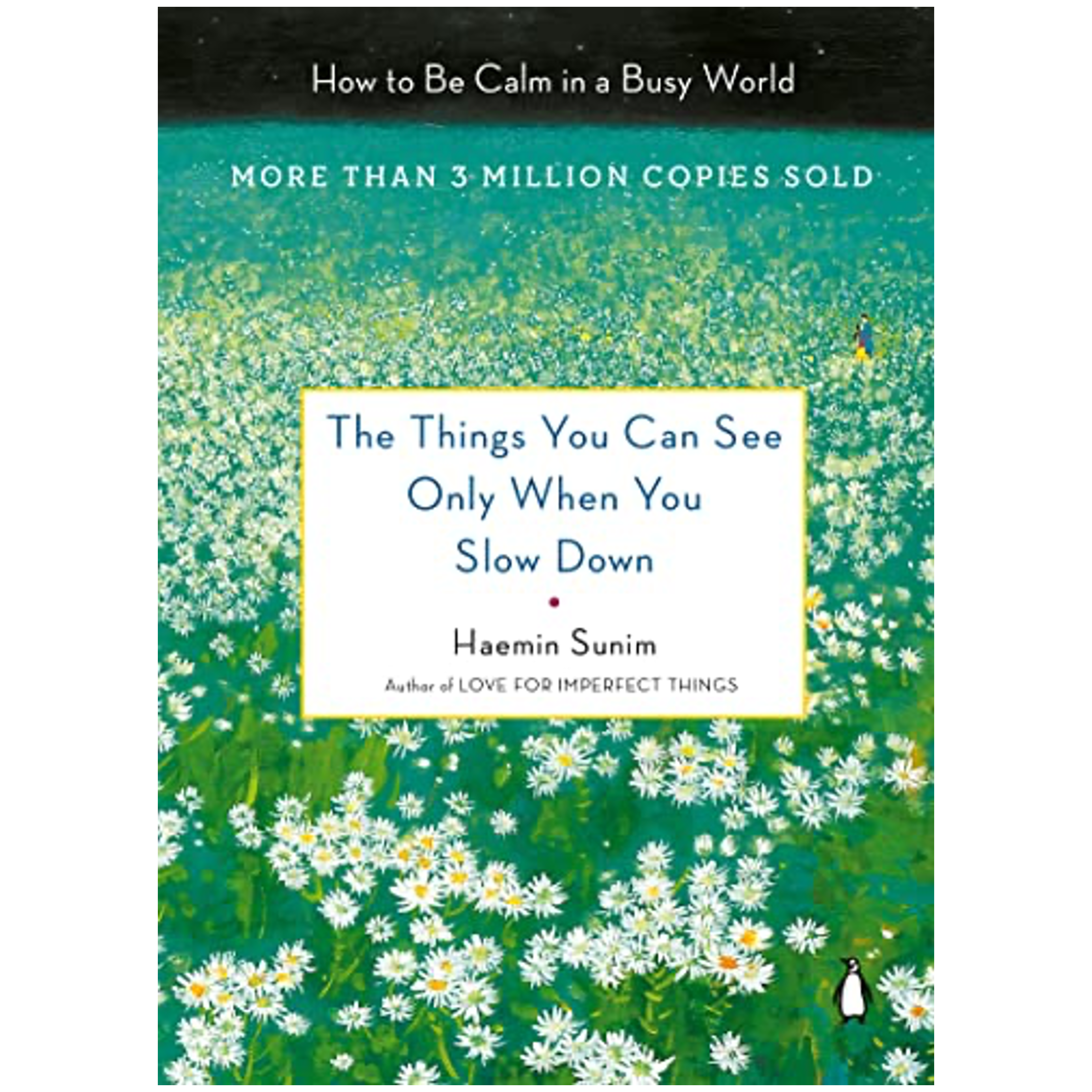
The Things You Can See Only When You Slow Down by Haemin Sunim

This is an easy-reading, poetic, and practical book on mindful living. If you’re drawn to contemplative practices, you’ll certainly be happy you added this one to your library.

In good breath,

Nick Heath, T1D, PhD
“Breathing is the compound interest of health & wellness.”

P.S. finally, some advice I can follow

Wisdom Meditation: Bridging the Second Gap

Wisdom Meditation is a simple, science-grounded practice designed to change how you actually live. In just 12 minutes a day, it helps you encode wisdom into your nervous system so calm, clarity, and better choices show up in real life.

Learn more here.

Treat Yourself to Less Stress & Better Breathing


Amazon Associate Disclosure

I’ve been recommending books for almost 6 years. Yet somehow, I just discovered that I could be an Amazon affiliate [face-palm]. In any case better late than never. Now, any Amazon link you click is an affiliate link. As an Amazon Associate, I earn from qualifying purchases. So, if you’d like to support my work, buying books through these links is helpful : )

* An asterisk by a quote indicates that I listened to this book on Audible. Therefore, the quotation might not be correct, but is my best attempt at reproducing the punctuation based on the narrator’s pace, tone, and pauses.


Glimmers over Triggers, More from Your Mind, and a Celebration of Life


Reading Time: 1 min 46 sec

I hope the next 21-ish breaths are the most nourishing of your day.


4 THOUGHTS

1. Glimmers over Triggers

“A glimmer is the opposite of a trigger; it’s any object or experience that creates a moment of unforced ease or joy. It works the same way as a negative trigger…but instead of sounding an alarm, they turn on the green light. The sight, sound, smell, taste, feel, or memory of a glimmer automatically creates a little bubble of gratitude and appreciation.”

- Martha Beck,
Beyond Anxiety

We all know certain things or situations can trigger us, sometimes for reasons we don’t even understand. But the opposite is also true: some things naturally elicit gratitude and appreciation.

Our task is to find those “glimmers” and deliberately add them to our lives—in our meditation corners, offices, rooms, etc.—so we can experience more comfort and joy each day.

2. Get the Most Out of Your Mind

“There is now enough robust science to show that mastering the simple movements needed to control the rate, depth and route by which you get air into your body can become a handy tool to steer thoughts and feelings in useful ways. Mastering this range of bodily movements can allow us to dial into the workings of the brain and the rest of the body, change the settings of both and get the very best out of the mind.”

– Caroline Williams,
Move

Nothing to add 👌

3. You Become What You Rehearse

Meditation doesn’t magically turn you into a better person, but it does make your mind malleable. What you expose your brain to in that relaxed state is what’s critical.

That’s why Wisdom Meditation is so powerful. By consistently rehearsing wisdom in that malleable state, it becomes second nature in the rest of your life. In other words, you become what you rehearse—that’s the core mechanism behind Wisdom Meditation.

If you’re curious, you can learn more here.

4. A Reminder of the Simplicity of Breathing

A large review of 29 studies on slow breathing to help chronic disease management came to a simple conclusion:

  • breathe slowly (about 5–6 breaths/min)

  • use a slightly longer exhale than inhale

  • employ nasal, abdominal breathing

  • practice about 10 minutes per day

  • getting a little human guidance helps

Hard to argue with that 😊


1 Quote

The greatest of all miracles is to be alive, and when you breathe in, you touch that miracle. Therefore, your breathing can be a celebration of life.”
— Thich Nhat Hanh

1 GOOD BOOK

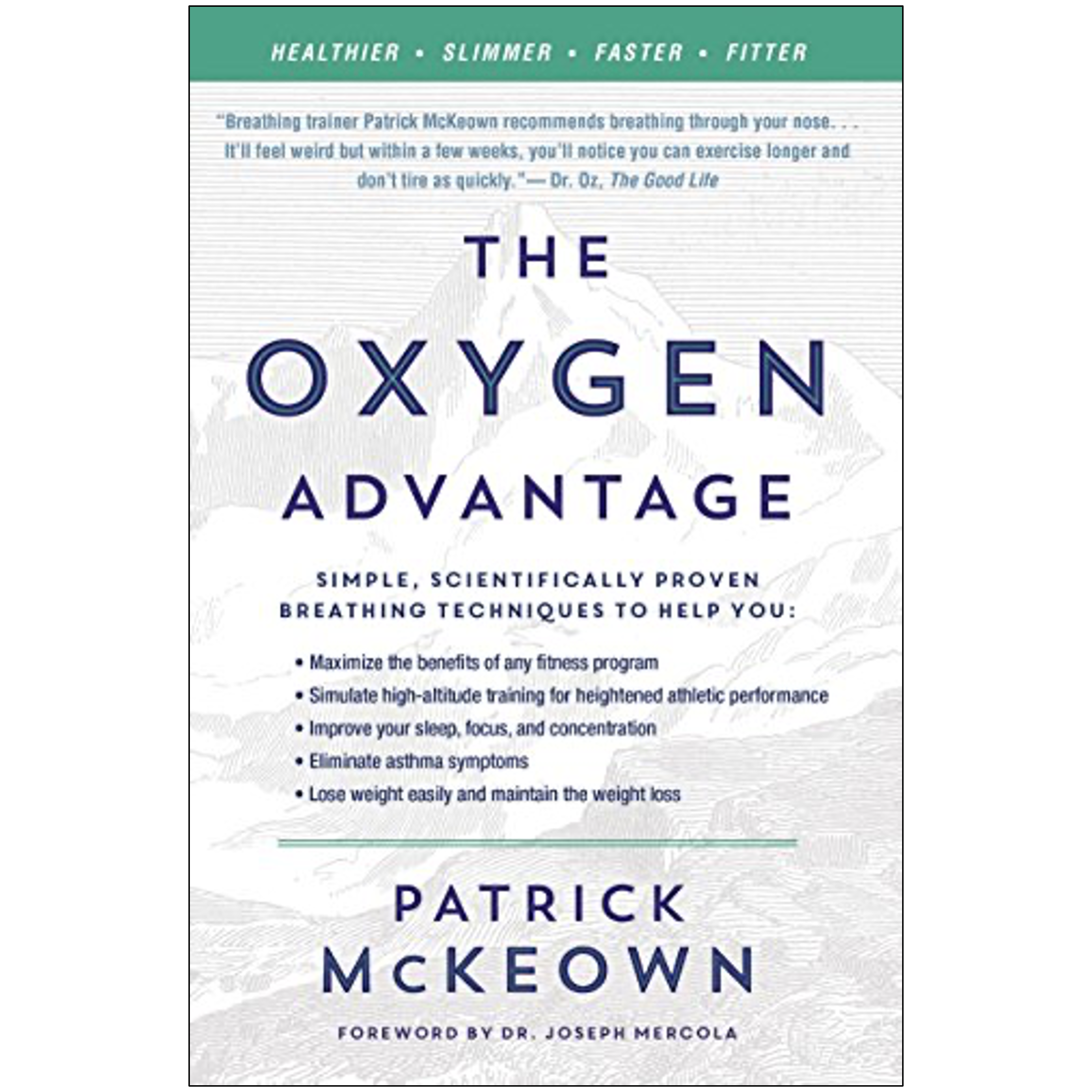
The Oxygen Advantage by Patrick McKeown

This one doesn’t need much explanation. If you’ve had it on your reading (or re-reading) list, here’s a nudge to pick it up.


In good breath,

Nick Heath, T1D, PhD
“Breathing is the compound interest of health & wellness.”

P.S. this time it’ll work

Wisdom Meditation: Bridging the Second Gap

Wisdom Meditation is a simple, science-grounded practice designed to change how you actually live. In just 12 minutes a day, it helps you encode wisdom into your nervous system so calm, clarity, and better choices show up in real life.

Learn more here.

Treat Yourself to Less Stress & Better Breathing


Amazon Associate Disclosure

I’ve been recommending books for almost 6 years. Yet somehow, I just discovered that I could be an Amazon affiliate [face-palm]. In any case better late than never. Now, any Amazon link you click is an affiliate link. As an Amazon Associate, I earn from qualifying purchases. So, if you’d like to support my work, buying books through these links is helpful : )

* An asterisk by a quote indicates that I listened to this book on Audible. Therefore, the quotation might not be correct, but is my best attempt at reproducing the punctuation based on the narrator’s pace, tone, and pauses.
 

Universal Stress Reduction, Feeling at Ease, and No Need to Worry


Reading Time: 1 min 36 sec

I hope the next 19-ish breaths are the most nourishing of your day.


4 THOUGHTS

1. A Universal Way to Reduce Any Stress Reaction

“Every time you breathe out, your heartbeat slows a little. Exhaling taps the brakes on your fight-or-flight response so that your heart rate can’t get dangerously high. That’s why—across hundreds of human cultures and even other species—a long, slow outbreath is a universal way to begin reducing any stress reaction.

- Martha Beck,
Beyond Anxiety

Nothing to add to this one 👌

2. The Subtle Habit That Keeps Us from Feeling at Ease

“Unfortunately, the pleasure principle also makes it difficult for us to just be. In virtually every moment we’re attempting to adjust our experience, trying to hold on to pleasant moments and avoid unpleasant ones. This makes it very difficult to relax fully and feel at ease or satisfied.”

- Ronald Siegel, PsyD,
The Mindfulness Solution

Definitely guilty here. And while mindfulness doesn’t instantly (or ever completely) fix this, it does make it easier to be with how things are rather than how we wish they would be 🙏

3. Thoughts, Thinking, and Insights

  • Thoughts: What your mind produces naturally. We can’t stop them; only allow them to arise and go on their own.

  • Thinking: Engaging with thoughts. This is usually what we mean by “mind wandering,” and it’s where rumination, worry, and anxiety typically pop up.

  • Insights: Valuable thoughts. They are the spontaneous sparks of wisdom that arise without thinking.

This distinction is one of my favorite parts of my new ebook on Wisdom Meditation. In it, I explore how this simple reframe can significantly enhance how we relate to our meditation practice.

4. There Is No Need to Worry

“If there is a solution, there is no need to worry, and if there is no solution, there is no reason to worry either.”

- Matthieu Ricard,
found in The No-Nonsense Meditation Book

This quote has been said by many different people in different ways, but it’s always a welcome reminder of the futility of worrying.


1 Quote

Our capacity to control our breathing and to breathe consciously is very beneficial to the brain. That’s why I like breathing meditation so much.”
— Steven Laureys, MD

1 GOOD BOOK

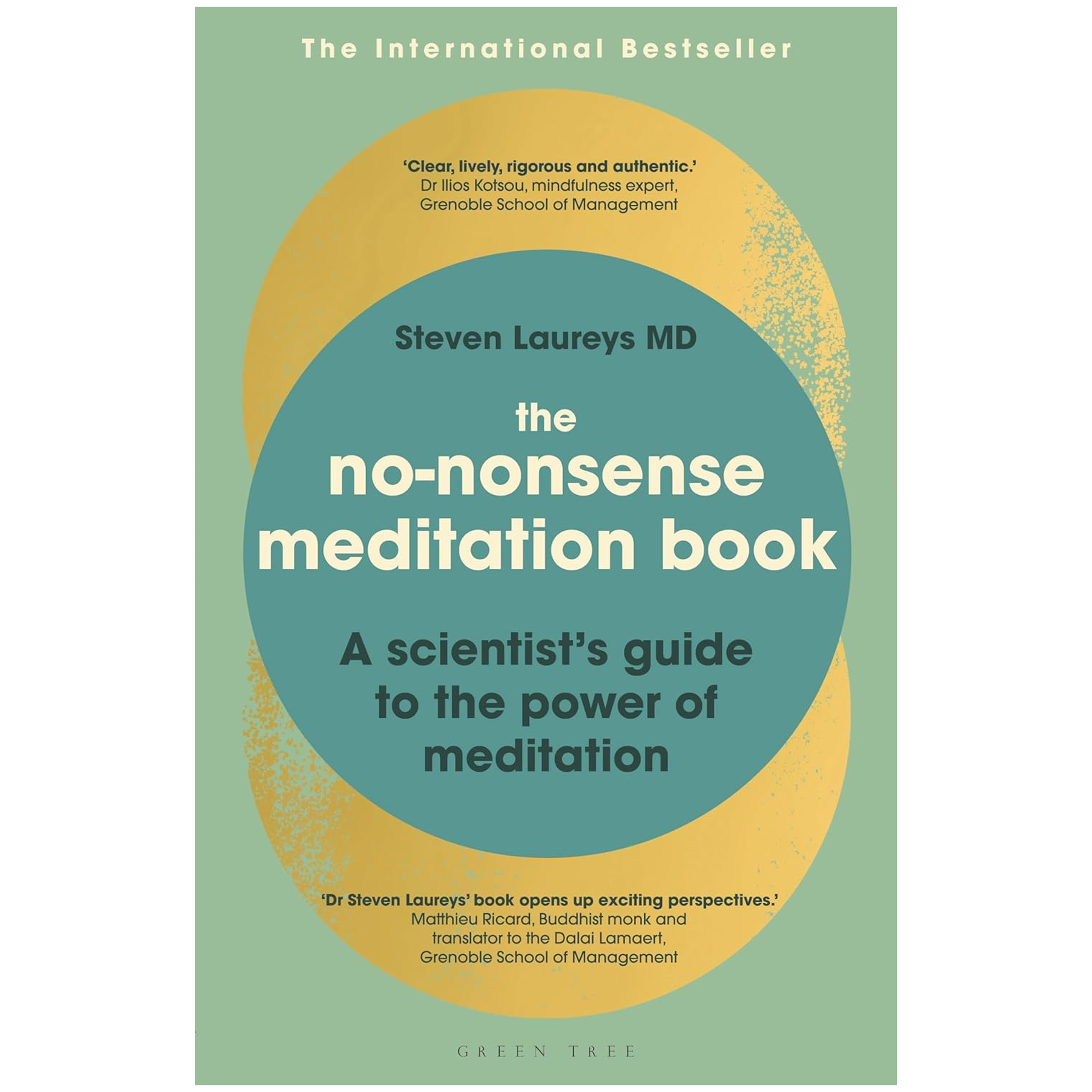
The No-Nonsense Meditation Book by Steven Laureys, MD

This is a great book on the science of meditation (along with many fun anecdotes and practical suggestions). There’s even a whole chapter on breathing 😊


In good breath,

Nick Heath, T1D, PhD
“Breathing is the compound interest of health & wellness.”

P.S. inner applause

Wisdom Meditation: Bridging the Second Gap

Wisdom Meditation is a simple, science-grounded practice designed to change how you actually live. In just 12 minutes a day, it helps you encode wisdom into your nervous system so calm, clarity, and better choices show up in real life.

Learn more here.

Treat Yourself to Less Stress & Better Breathing


Amazon Associate Disclosure

I’ve been recommending books for almost 6 years. Yet somehow, I just discovered that I could be an Amazon affiliate [face-palm]. In any case better late than never. Now, any Amazon link you click is an affiliate link. As an Amazon Associate, I earn from qualifying purchases. So, if you’d like to support my work, buying books through these links is helpful : )

* An asterisk by a quote indicates that I listened to this book on Audible. Therefore, the quotation might not be correct, but is my best attempt at reproducing the punctuation based on the narrator’s pace, tone, and pauses.


Why We Want High HRV, Monk Brains, and How to Make Decisions


Reading Time: 2 min 0 sec

I hope the next 24-ish breaths are the most nourishing of your day.


4 THOUGHTS

1. Why We Want High HRV (and how to get it)

“High heart rate variability is associated with smooth, efficient prefrontal cortex activity and executive-function tasks including working memory and inhibitory control. This means that by increasing your heart rate variability, you improve your prefrontal lobe activity and with it your ability to self-regulate, inhibit negative thoughts, make objective decisions, and remember what you learn.

- Leah Lagos, Psy.D.,
Heart Breath Mind

And one of the fastest (if not the fastest) and most reliable ways to increase HRV? Slow breathing, of course 😊

2. How the Brains of Meditating Monks Give Hope

In Beyond Anxiety, Martha Beck describes how reading a single meditation study influenced her life. I’m sharing it as a powerful reminder of what contemplative practices can offer:

“Each new study I read gave me more hope, especially a study where neurologists peered into the brains of Tibetan monks who had spent years in meditation. These men, it was found, had unusually dense tissue in the brain regions associated with happiness, compassion, and calm. … In the end, my career was based less on my intellectual training than on my near-pathological conviction that every one of us can fulfill our deepest longing and make the world a better place. After I read the Tibetan monk study, this conviction grew roots so deep nothing could shake it. I was convinced I could fix my brain.”

3. How to Make Decisions Right

“Rather than recommending endless analysis, my experience and research suggest taking a limited amount of information available at the time and going ahead and choosing an option. Then, rather than worry about whether the decision was right, we should try to make it work. Look at any advantages that accrue from whatever happens, and then play it as the “right decision.” That is, don’t try to make the right decision, make the decision right.

- Ellen Langer, Ph.D.,
The Mindful Body

I’m not sure if I fully agree with this (lol), but I always appreciate viewpoints that make me pause and think. Perhaps we can never truly know whether a decision was “right,” so the better practice is to learn how to “make the decision right.” 🤔

4. The Beauty of Doing Something Daily

Here is the beauty of doing something daily: it enables us to see clearly, know deeply, and understand our world more intimately.

- Libby Delana,
Do Walk

Just an excellent reminder of the value of a daily practice, whether it’s breathing, meditation, walking, or something else you enjoy.


1 Quote

Getting more familiar and even comfortable with knowing that we don’t know is its own form of profound and healing intelligence.”
— Jon Kabat-Zinn, PhD

1 GOOD BOOK

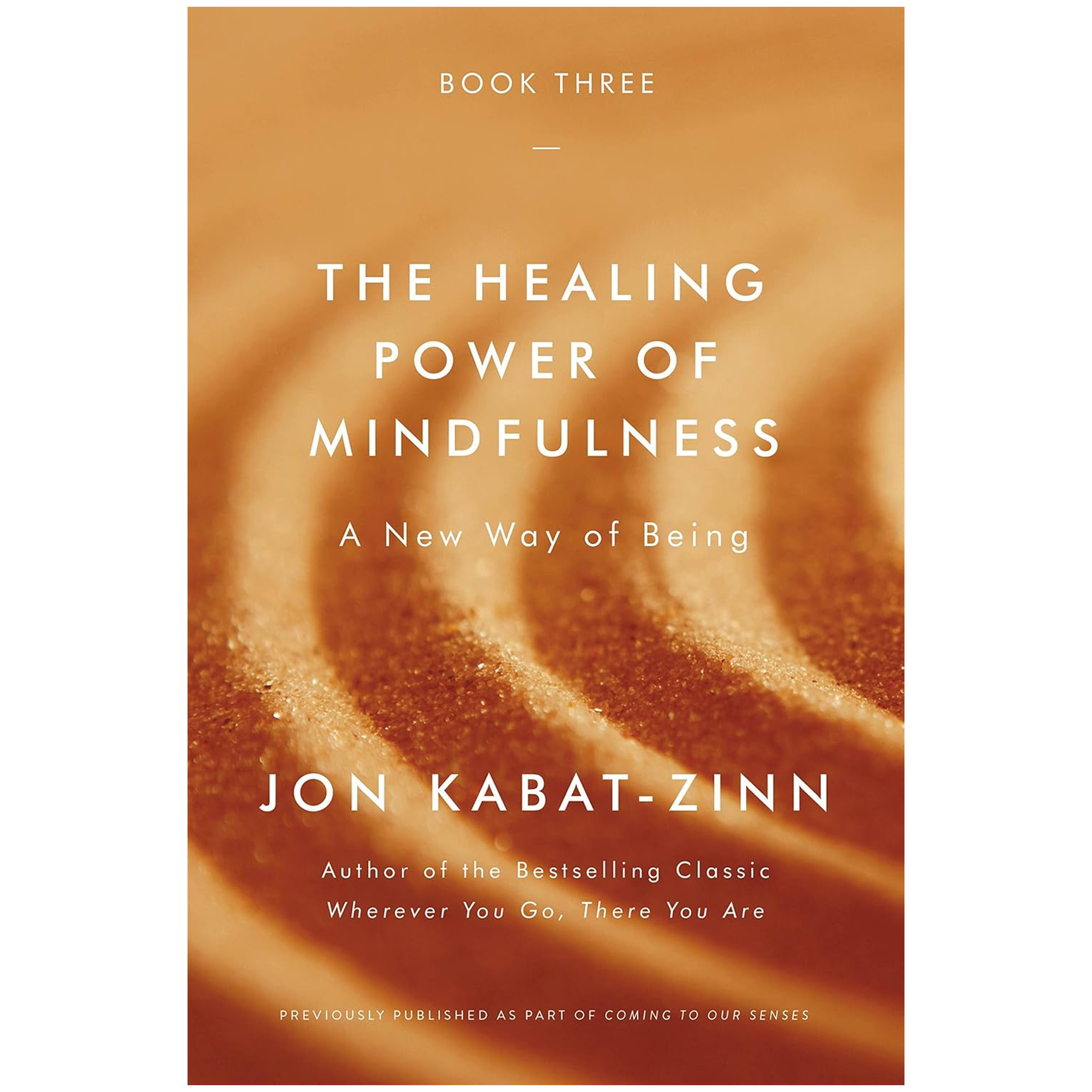
The Healing Power of Mindfulness by Jon Kabat-Zinn, Ph.D.

This is another excellent mindfulness book from Kabat-Zinn. I’d still recommend Full Catastrophe Living first, but this is a great follow-up, grounded in both science and practicality.


In good breath,

Nick Heath, T1D, PhD
“Breathing is the compound interest of health & wellness.”

P.S. it would be a hit

Wisdom Meditation: Bridging the Second Gap

Wisdom Meditation is a simple, science-grounded practice designed to change how you actually live. In just 12 minutes a day, it helps you encode wisdom into your nervous system so calm, clarity, and better choices show up in real life.

Learn more here.

Treat Yourself to Less Stress & Better Breathing


Amazon Associate Disclosure

I’ve been recommending books for almost 6 years. Yet somehow, I just discovered that I could be an Amazon affiliate [face-palm]. In any case better late than never. Now, any Amazon link you click is an affiliate link. As an Amazon Associate, I earn from qualifying purchases. So, if you’d like to support my work, buying books through these links is helpful : )

* An asterisk by a quote indicates that I listened to this book on Audible. Therefore, the quotation might not be correct, but is my best attempt at reproducing the punctuation based on the narrator’s pace, tone, and pauses.