Buddha

Better Decisions, Health & Happiness, and Why We Train the Mind


Reading Time: 1 min 41 sec

I hope the next 20-ish breaths are the most nourishing of your day.


4 THOUGHTS

1. How to Make Better Decisions: Take 5 Breaths

“Taking five deep, intentional breaths activates your parasympathetic nervous system, grounds you in the present moment, and begins to calm the storm. It's the first step in shifting from reaction to clarity—from fear to truth.”

- Joseph Nguyen, The Overthinker’s Guide to Making Decisions

We make our best decisions when we feel rooted and psychologically safe. That’s why Nguyen’s first step to better decisions for overthinkers is simple: take five slow, deep breaths.

2. Inner Resources and Recovering More Quickly

“Developing inner resources is like deepening the keel of a sailboat so that you’re more able to deal with the worldly winds—gain and loss, pleasure and pain, praise and blame, fame and slander—without getting tipped over into the reactive mode. Or at least you can recover more quickly.”

– Rick Hanson, Ph.D., Neurodharma

Although Hanson is talking about inner resources in general, it’s a perfect analogy for the power of slow, deep breathing: it deepens the keel of your “physiological sailboat.” You’ll still be hit by life’s storms, but you’ll stay steadier and recover more quickly.

Deep breathing = deep keel.

3. Enhancing the Nervous System’s Adaptability and Longevity

“Our hypothesis is that yoga breathing provides a neurophysiological “work-out” that leads to greater flexibility and plasticity in the nervous system.

- Brown and Gerbarg (2009), Ann. N. Y. Acad. Sci.

Here’s another way breathing exercises “deepen our keel.” Brown and Gerbarg propose that combining calming, slow-breathing methods with more activating, fast-breathing techniques gives the nervous system a workout, building adaptability, resilience, and potentially enhancing longevity.

4. Why We Train the Mind

“It is hard to train the mind, which goes where it likes and does what it wants. But a trained mind brings health and happiness.”

- The Buddha, The Dhammapada

Just a gentle reminder that, although the practice can be challenging, we train our minds for a simple reason recognized across cultures for millennia: a trained mind brings health and happiness.


1 Quote

As we see it, the most compelling impacts of meditation are not better health or sharper business performance but, rather, a further reach toward our better nature.”
— Daniel Goleman, Ph.D. & Richard Davidson, Ph.D.

1 GOOD BOOK

Altered Traits by Daniel Goleman, Ph.D. & Richard Davidson, Ph.D.

I loved this one. It’s a clear, balanced look at what science actually says about meditation. If you enjoy nerding out on contemplative practice, I highly recommend it.


In good breath,

Nick Heath, T1D, PhD
“Breathing is the compound interest of health & wellness.”

P.S. what’s your 5-year plan?

Treat Yourself to Less Stress & Better Breathing


The Breathing App for Diabetes

This is the first program specifically made for people with diabetes to help manage their stress through breathing and mindfulness practices. In addition to the amazing program inside the app, we have some really neat things coming up, so sign up now!

Learn more here.


Amazon Associate Disclosure

I’ve been recommending books for almost 6 years. Yet somehow, I just discovered that I could be an Amazon affiliate [face-palm]. In any case better late than never. Now, any Amazon link you click is an affiliate link. As an Amazon Associate, I earn from qualifying purchases. So, if you’d like to support my work, buying books through these links is helpful : )

* An asterisk by a quote indicates that I listened to this book on Audible. Therefore, the quotation might not be correct, but is my best attempt at reproducing the punctuation based on the narrator’s pace, tone, and pauses.


Brain & Mind, Simplicity, and How to Improve Everyone’s Wellness


Reading Time: 1 min 50 sec

I hope the next 22-ish breaths are the most nourishing of your day.


4 THOUGHTS

1. How to Synchronize Breath, Brain, and Mind

“The synchronization between respiration and slow neural activity is likely key to understanding the brain-physiology relationship…Slow rhythms thus provide a link and shared feature of respiration, neural, and mental activity serving as their ‘common currency.’”

- Goheen et al. (2023), Neuroscience Bulletin

Slow rhythms are the “common currency” of breath, brain, and mind. And since breath is the easiest one to slow on purpose, it’s the fastest way to calm the others. Breathe slowly, and the rest follows.

2. Why Breathing is a Most Important Part of Meditation

“So, the curious thing about breath is that it can be looked at both as a voluntary and an involuntary action. You can feel, on the one hand, ‘I am doing it,’ and, on the other hand, ‘it is happening to me.’ And that is why breathing is a most important part of meditation—because it is going to show you, as you become aware of your breath, that the hard and fast division that we make between ‘what we do’ on the one hand and ‘what happens to us’ on the other is arbitrary.

– Alan Watts, Leave It Be
(transcribed from audio)

Another gem from Watts on how, with the proper framing, observing the breath becomes a gateway into a universal insight: “doing” and “being done to” are often indistinguishable.

3. How to Improve Everyone’s Well-Being

“These analyses demonstrated the potential therapeutic role of laughter-inducing interventions as a complementary strategy to improve everyone’s well-being and highlight the need for further research aiming to improve our collective sense of humor.”

- Kramer and Leitao (2023), PLOS One

I’ve shared this one before, but it’s worth revisiting: Across eight studies, they found that laughter reduced cortisol by 31.9%. So laugh more this week—and help someone else laugh too.

4. How to End Quarrels

“People forget that their lives will end soon. For those who remember, quarrels come to an end.”

- The Buddha, The Dhammapada

Amazing how, when we reflect on how short life is, most of our conflicts start looking pretty insignificant. And the few that don’t are a gift, revealing what matters most to us.


1 Quote

Life is sustained by breath. The moment we have that sense of shared breath, a sense of relationship to the world, we have spirituality.”
— Satish Kumar

1 GOOD BOOK

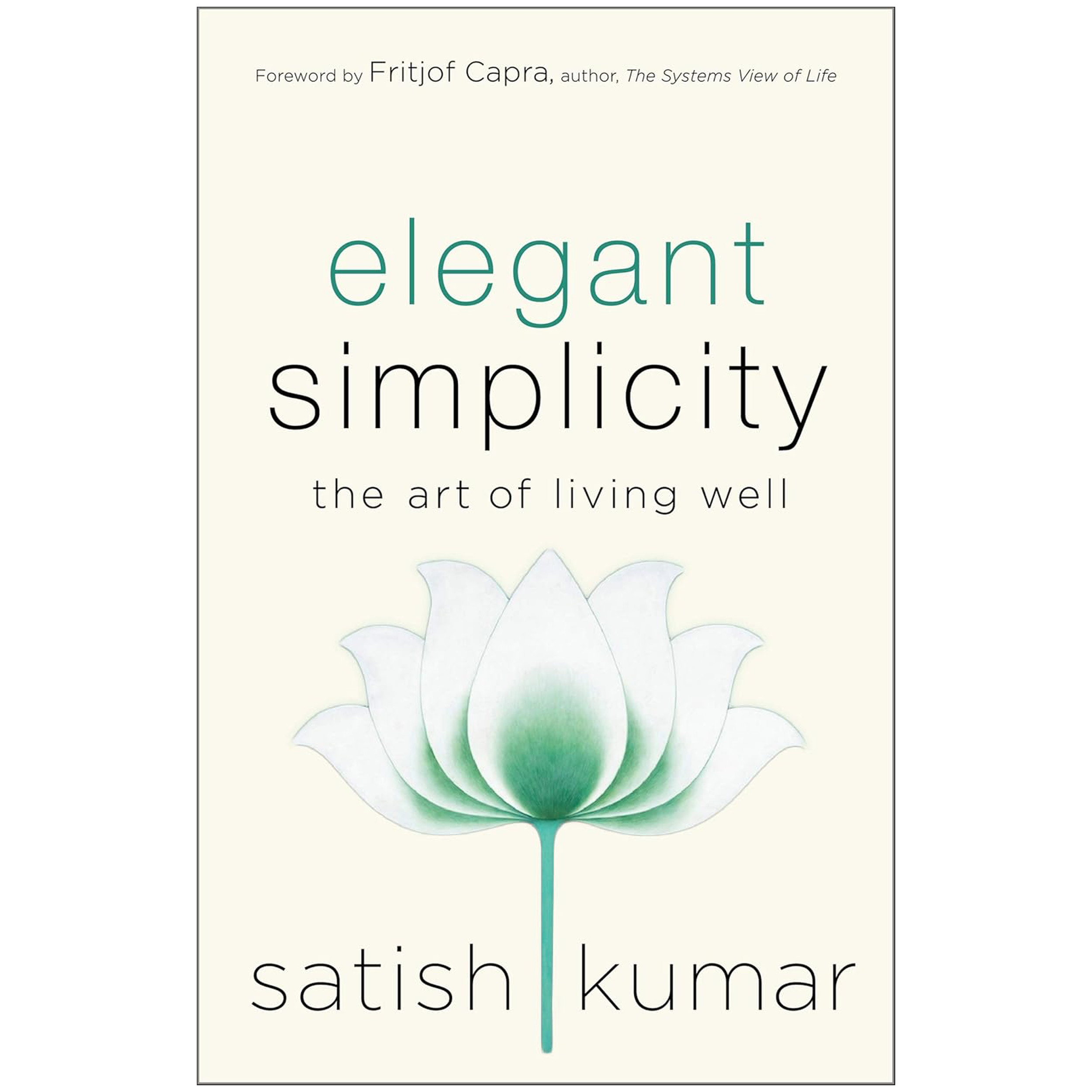
Elegant Simplicity by Satish Kumar

Kumar once walked 8,000 miles with no money in his pocket for a cause he believed in…crazy. That ‘be the change’ pilgrimage spirit carries through to this book. He lays out how to simplify your life—not just materially, but also mentally and spiritually, too.


In good breath,

Nick Heath, T1D, PhD
“Breathing is the compound interest of health & wellness.”

P.S. “you looked stressed”

Get One of My Digital Guidebooks


The Breathing App for Diabetes

This is the first program specifically made for people with diabetes to help manage their stress through breathing and mindfulness practices. In addition to the amazing program inside the app, we have some really neat things coming up, so sign up now!

Learn more here.


Amazon Associate Disclosure

I’ve been recommending books for almost 6 years. Yet somehow, I just discovered that I could be an Amazon affiliate [face-palm]. In any case better late than never. Now, any Amazon link you click is an affiliate link. As an Amazon Associate, I earn from qualifying purchases. So, if you’d like to support my work, buying books through these links is helpful : )

* An asterisk by a quote indicates that I listened to this book on Audible. Therefore, the quotation might not be correct, but is my best attempt at reproducing the punctuation based on the narrator’s pace, tone, and pauses.


5 Favorite Breathing Products, 4 Favorite Newsletters, and the Here and Now


Listen Instead of Reading

If you enjoy listening, you can subscribe to the audio version on Spotify, Apple Podcasts, and Audible so you don’t even have to look at the email 😊


4 THOUGHTS


1. The Power of Breath Awareness (a joyful abiding in the here & now)


“The breath accompanies you the full length of life’s road: you learn about the body, feelings, mental formations, the mind itself, and, finally, the lawfulness of impermanence and emptiness of a substantial self.”

- Larry Rosenberg, Three Steps to Awakening


This passage beautifully highlights the power of breath awareness.

And perhaps this power is why the Buddha formally practiced mindful breathing, even after attaining enlightenment:

“Even after full enlightenment, the Buddha himself set aside personal retreat time for the practice of mindfulness of breathing, calling it ‘a joyful abiding in the here and now.’”

Here’s to using our breath to joyfully abide in the here and now a little more this week 🙏


2. Change How You Feel (almost instantaneously)


“Our breathing pattern can have an enormous effect on our psycho-physical state.  This means that changing the way we breathe can literally change the way we feel, almost instantaneously.  Want to be relaxed? Breathe like you already are.”

– Charlie Morley, Wake Up to Sleep


I’ve shared passages like this probably a dozen times now.  But it never gets old, because it’s the most powerful part of breathing: we can almost instantaneously change how we feel anytime, anywhere.

Make sure you use this amazing gift at least once today 🙏


3. My 4 Favorite Newsletters


If you’re looking to diversify your wisdom, here are four of my favorite newsletters. There are many I enjoy, but I always read these four:

1. Light’s Daily Dose: This is my favorite one. It’s just a small inspirational wisdom nugget each day. It’s amazing. (Sign Up)

2. James Clear’s 3-2-1: You probably know this one. And of course, I copied his format ~3 years ago to create the “411” 😊 (Sign Up)

3. Brain Food: Random life-changing wisdom. A must-read every Sunday. (Sign Up)

4. Josh Spector’s Daily Email: The shortest email you’ll get. Sometimes it’s an idea, but usually a link to a cool resource. (Sign Up)


4. Five Breathing Products I Love


Although it’s hard for me to believe, people occasionally send me free breathing stuff. Here are some cool products I’ve tried and loved, in no particular order:

ResBiotic: Daily probiotic that targets the gut-lung access for better lung health. (Learn More)

Airofit: A super sophisticated resistance breathing device. (The one I use) (Here’s a cheaper Version that does same thing, just no bluetooth)

AER Filters: Gives our nose filtering a little boost. (UK store.) (If you’re in the US, you can get them on Amazon here.)

Anicca: A mindful breathing device. Don’t think it’s for sale to the public yet, but if you’re therapist of any kind, check it out. (Learn More)

BeWell “Breathing is Cool” Sweatshirt: Do yourself a favor, and go buy one of these right now. It’ll support an amazing cause, and you’ll have one of the coolest sweaters out there 🙏 (Link to Buy)


Breath is Life Learning Center

Learn & integrate different methods, philosophies, and approaches to breathing for better mental and physical health.

Join Today.

$14.99/month or $149/year


1 Quote

May your adventures be truly great for as long as you take another breath. And may you live long as you seek to discover the wonders and the benefits that each breath has to offer in this, the journey of life.”
— Rev. Duffy Peet

1 Answer

Category: Sneezing

Answer: This reflex is characterized by successive sneezing as the result of exposure to bright light.

(Cue the Jeopardy! music.)

Question: What is the photic sneeze reflex?


In good breath,

Nick Heath, T1D, PhD
“Breathing is the compound interest of health & wellness.”


P.S. why do you have that thing?


* An asterisk by a quote indicates that I listened to this book on Audible. Therefore, the quotation might not be correct, but is my best attempt at reproducing the punctuation based on the narrator’s pace, tone, and pauses.


Sign Up For The Breathing 411

Each Monday, I curate and synthesize information from scientific journals, books, articles, and podcasts to share 4 thoughts, 1 quote, and 1 answer (like "Jeopardy!") related to breathing. It’s a fun way to learn something new each week.


Breathing & Love, Rising Above the Clouds, and 4 Years in 4 Points


Listen Instead of Reading


4 Thoughts


1. Demonstrations of Breathing & Love

Demonstrations of love are small, compared with the great thing that is hidden behind them.

- Khalil Gibran

Call it what you’d like, prana, qi, & so on, but the same is true: Demonstrations of breathing are small compared with the great thing that is hidden behind them.

2. Breathing for Diabetes: 4 Years in 4 Bullet Points

Based on about 4 years of research and self-practice, the 4 key ways that regular breathing practices help diabetes are by:

3. Breathing for (non) Diabetics: “Raising Our Heads Above the Clouds

But many of the same interventions that can help us get our heads above water can just as effectively be devoted to raising our heads above the clouds.

- Steven Kotler and Jamie Wheal, Stealing Fire

This is unquestionably true for breathing. Although everything I read, practice, and share is focused on keeping my “head above the water” as a diabetic, they can also “raise your head above the clouds” if you’re not diabetic.

Interesting side note: it’s typically broken people that find supplemental modalities like breathing—I guess because we need them the most : ) But if you’re not broken, all the benefits of breathing will be even more helpful.

So here’s to using our breathing to stay afloat, or rise above the clouds, today.

4. The Buddha, 20 Years after Enlightenment

Did you know that the Buddha was still meditating 20 years after his enlightenment? (I guess it never ends, folks 😄)

What kind of meditation, you might wonder? “Mindfulness of breathing.

Extra Thought: Take High Altitude Yoga Alongside Me One Last Time

My wife is moving on to a new yoga adventure 🎉. But, she’ll be teaching the High Altitude Yoga class we designed together one last time.

The class incorporates slow breathing, breath holds, and yoga into a challenging but fun 45-min flow.

It’s $8 and happening tomorrow morning (Tuesday, Dec 14) at 6:15 a.m. EST. I’ll be there, and I hope you’ll join me in taking it!


Take High Altitude Yoga One Last Time


1 QUOTE

“Relaxing the breath, breathe in. Relaxing the breath, breathe out. Then joy arises naturally.”

- Bhante Gunarantana

The Four Foundations of Mindfulness in Plain English


1 ANSWER

Category: The Diaphragm

Answer: This organ rests on the top of the diaphragm.

(Cue the Jeopardy! music.)

Question: What is the heart?

P.S. This was inspired by Jill Miller’s amazing line: “Thank you from the bottom of my heart. Which is of course, my diaphragm.” (Makes me laugh every time.)


In good breath,

Nick Heath, T1D, PhD
“Breathing is the compound interest of health & wellness.”

P.S. and I’ve never respected anything more


Sign Up For The Breathing 411

Each Monday, I curate and synthesize information from scientific journals, books, articles, and podcasts to share 4 thoughts, 1 quote, and 1 answer (like "Jeopardy!") related to breathing. It’s a fun way to learn something new each week.


Delightful Practice, Reverse Arambhashura, and The Buddha’s Take on Science


Listen Instead of Reading


Hello,

Here are four thoughts, one quote, and one answer for this week.

I hope you enjoy it!


4 Thoughts


1. What Science Has in Common with The Buddha

Research in general tells us something about most people. Given that our concern is for what we, rather than what most people, should do, current medical practice alone cannot have a definitive answer…We need to learn how to integrate what the medical world knows to be generally true with what we know, or can find out, about ourselves.

- Ellen Langer, Ph.D., Counterclockwise

Ellen Langer was the first woman to be tenured in Harvard’s Psychology Department. She’s a badass, and this book is insanely good. If you’re interested in applying scientific research in your own life, it’s a must-read.

The above passage is particularly critical for breathing. As we continue to learn new things about breathwork, the most important thing is to integrate that knowledge with our personal situation to find out what’s best for us.

And remember, just because it worked in a study doesn’t mean it will work for you.

As the Buddha supposedly said, “Believe nothing, no matter where you read it, or who said it, no matter if I have said it, unless it agrees with your own reason and your own common sense.” It seems like Dr. Langer would agree : )

How do we do this in our own lives? Let’s turn to another brilliant mind for more advice in Thought #2.

***

Related Quote:I believe books are medicine. A library is a medicine cabinet. What can heal one person may not work at all for somebody else. You know when something is healing you, just as you know when something isn't.” - Sandra Cisneros (I know it’s about books, but still so good.)

2. Delight in Practice: How To Integrate Science Into Your Life

So look for what feels good and meaningful in what you’re already doing, and perhaps find additional things that are naturally pleasurable for you…Practice is less effective if it’s heavy and somber most of the time. It’s ok to have fun with it.

- Rick Hanson, Ph.D., Neurodharma

How’s that for a book title? There was no way I could not read that one : )

It’s packed with insight, but I thought this passage paired perfectly with Thought #1. To begin applying the new things you learn about breathing, start with what you already find meaningful, and add on from there.

For example, suppose you love the Oxygen Advantage. But, then you learn that taking big breaths every now and then is beneficial for lung capacity. In that case, you might try adding 5 big breaths before each breath hold you perform. If you like it, you keep it. If not, you don’t.

We also don’t want to take it too seriously (often guilty here). As Dr. Hanson also tells us, “It’s good to bring playfulness, even delight, to your practices.

Here’s to applying rigorous science in our lives in a delightful way, today.

***

Related Quote:As long as you derive inner help and comfort from anything, keep it.” - Gandhi

Related: Science Guides the Macro, Practice Guides the Micro (Thought #4)

3. Forbes: “How Breathing Calms Your Brain, And Other Science-Based Benefits Of Controlled Breathing”

A brief review of the latest science on breathing and the brain, and overall health, serves as a reminder that breathing deserves much closer attention – there’s more going on with each breath than we realize.

- David DiSalvo, Forbes Magazine

Here’s a quick summary of some of the science-backed benefits of breathing from Forbes. It was written 2017, but just as relevant today.

I liked the headline-paragraph-headline-paragraph style. Concise and informative. I hope you enjoy it too!

4. Slow Breathing as Reverse Arambhashura

There’s a Sanskrit word, arambhashura, which means something like “hero in the beginning.” We’ve all been there. You start a project all excitedly, but the excitement wanes. You hit some roadblocks. You decide it’s not worth it.

A slow breathing session is like reverse arambhashura. Because of the positive breathing-relaxation feedback loop, you gain motivation as you go. And when you’re done, you’re more focused, relaxed, and happy than when you began. You’re a hero at the end.

Here’s to practicing a little reverse arambhashura today.


1 Quote

The kind of success I am most interested in is the sort available to every human being living, breathing, thinking, and doing things on this earth.

– Tom Morris


1 Answer

Category: Body Oxygen Consumption

Answer: For the energy to perform their vital functions, the lungs themselves consume this percentage of the total body oxygen consumption.

(Cue the Jeopardy! music.)

Question: What is 5%?


In good breath,

Nick Heath, T1D, PhD
Diabetes is Tiny. You are Mighty.

P.S. I actually needed to hear this…


Sign Up For The Breathing 411

Each Monday, I curate and synthesize information from scientific journals, books, articles, and podcasts to share 4 thoughts, 1 quote, and 1 answer (like "Jeopardy!") related to breathing. It’s a fun way to learn something new each week.