Oren Jay Sofer

How to Signal Calm, Nirvana, and Increasing Your Odds of Happiness


Reading Time: 1 min 45 sec

I hope the next 21-ish breaths are the most nourishing of your day.


4 THOUGHTS

1. How to Send Signals of Calm to Your Brain

“Most contemplative practices share the commonality of slowed breathing, either intentionally, or as a consequence of the calming practice…changes in breathing rate are quickly signaled to the brain, allowing the brain to interpret that the body is in a relaxed, calm state, and safe state.”

- Crosswell et al. (2024), Psychological Review

When you deliberately slow your breath, the brain receives signals of safety, allowing the rest of the body to reach a relaxed, calm, and peaceful state. In other words, calm isn’t something you chase, it’s something you can signal.

2. Exhaling to Reach Nirvana

“Nirvana. This word means ‘blow out.’ Nir is a negative word, and vana is blowing. So, it’s a kind of out blowing.

So, nirvana means ‘breathe out.’ Let it go because it will come back to you if you let it go. But if you don’t let it go, you’ll just suffocate.”

– Alan Watts, Leave It Be
(lighlty edited for readability)

How good is that? It brings to mind this one from Michael J Stephen, MD: “Buddhism and Hinduism were based on an understanding of the potency of the breath. According to these disciplines, studying and harnessing the breath was the only recognized way to nirvana.”

3. Breath as a Built-In Feature of Prayer & Mantras

“Recitation of the rosary, and also of yoga mantras, slowed respiration to almost exactly 6/min, and enhanced heart rate variability and baroreflex sensitivity.”

- Bernardi et al. (2001), British Medical Journal

I was on a call with some friends when this study came up. It reminded me of how classic prayers and mantras naturally slow the breath to ~6 breaths/min, without any instructions. Even a simple phrase repeated gently can be a doorway to calm.

4. How to Increase Your Odds of Happiness 6 Billion to 1

“As I've heard it told, the Dalai Lama once said, ‘When you count others’ happiness as your own, your chances of being happy increase six billion to one.’”

- Oren Jay Sofer, Say What You Mean

Sounds like better odds to me : )


1 Quote

That point at the tip of the nostril can be viewed as a sort of a window between the inner and outer worlds.”
— Bhante Gunaratana

1 GOOD BOOK

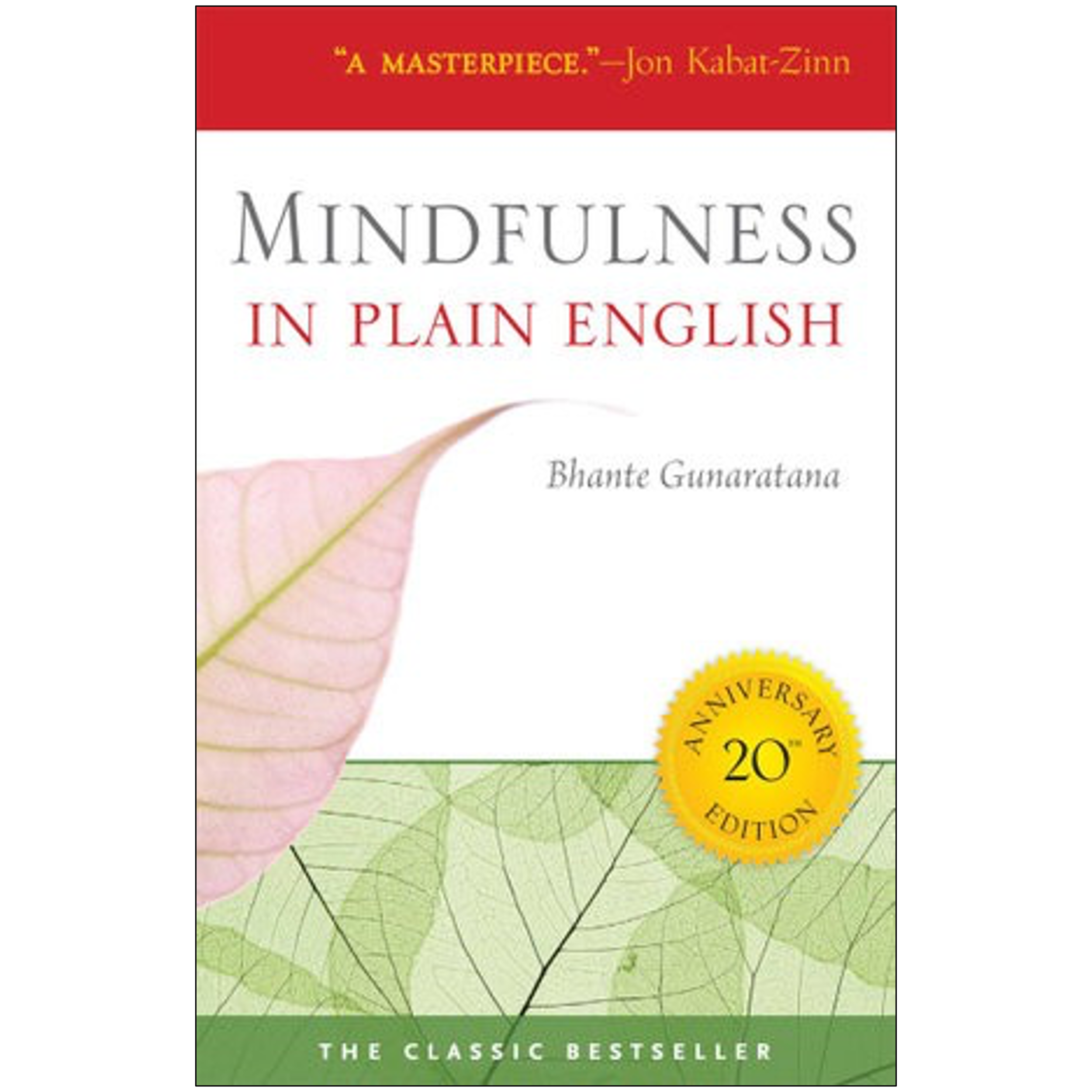
Mindfulness in Plain English by Bhante Gunaratana

This book is an excellent foundational resource on meditation and mindfulness. I had to read it three times to fully appreciate how good it is. I definitely recommend it.

In good breath,

Nick Heath, T1D, PhD
“Breathing is the compound interest of health & wellness.”

Enjoy these posts? Donate to say thanks!

P.S. tis the season

Get One of My Digital Guidebooks


The Breathing App for Diabetes

This is the first program specifically made for people with diabetes to help manage their stress through breathing and mindfulness practices. In addition to the amazing program inside the app, we have some really neat things coming up, so sign up now!

Learn more here.


Amazon Associate Disclosure

I’ve been recommending books for almost 6 years. Yet somehow, I just discovered that I could be an Amazon affiliate [face-palm]. In any case better late than never. Now, any Amazon link you click is an affiliate link. As an Amazon Associate, I earn from qualifying purchases. So, if you’d like to support my work, buying books through these links is helpful : )

* An asterisk by a quote indicates that I listened to this book on Audible. Therefore, the quotation might not be correct, but is my best attempt at reproducing the punctuation based on the narrator’s pace, tone, and pauses.


Grow the Good, Speech, and 2 Ways to Practice Slow Breathing


Reading Time: 1 min 46 sec

I hope the next 21-ish breaths are the most nourishing of your day.


4 THOUGHTS

1. It’s About Pace, Not Speed

“It is a gentle, slow practice…and pace (not speed) matters. There is no rushing, no urgency embedded into a step. It isn’t a task to ‘get over’ so I can move on to the next thing on the list. Instead it is an opportunity to be aligned with the pace of the natural world.

- Libby DeLana, Do Walk

This was about walking, but it applies equally well to contemplative practices. They’re about pace, not speed. You’re aligning with the flow of the natural world before getting carried away by the day’s tasks.

So for our purposes, we might modify DeLana’s words as: There is no rushing, no urgency embedded into a breath. 👏

2. Using Speech to Shift How We Feel

“Because speech is created with breath and because our breath is directly tied to our nervous system, the pace of our speaking is often a direct reflection of our internal state. What’s fascinating is that changing our pace of speech can shift our internal state.”

- Oren Jay Sofer, Say What You Mean

Speaking of pace, here’s an excellent reminder that we can shift our internal state simply by speaking more slowly. This will slow our breathing, allowing our nervous system to calm down.

3. Two Ways to Practice Slow Breathing

1. Deliberate Slow Breathing: Using a pacer or counting to intentionally breathe slowly at a set pace (like 6 breaths/minute).

2. Natural Slow Breathing: Using meditation or relaxation to put your physiology in a state where slow breathing occurs spontaneously.

Either one is an effective way to improve wellness, so pick the approach that suits you best 🙏

4. Grow the Good to Crowd Out the Bad

“When I was working for the St. Louis Rams, I asked the head groundskeeper, Scott Parker, how I could get rid of the weeds in my yard at home. With great confidence, he replied, ‘Grow more grass.’ Growing more grass chokes out the weeds.

– Drs Jason Selk & Ellen Reed, Relentless Solution Focus

I’ve shared this before, but its wisdom is timeless: In any challenging situation, let’s ask: “Am I growing more grass or just pulling weeds?


1 Quote

In other words, by changing the breath pattern one can induce a chosen state of mind.”
— Swami Niranjanananda Saraswati

1 GOOD BOOK

Spinal Breathing Pranayama by Yogani

Even if you don’t practice “spinal breathing pranayama,” this is a great read. It offers many practical guidelines and lots of wisdom on the breath. Definitely worth checking out if you enjoy slow breathing.


In good breath,

Nick Heath, T1D, PhD
“Breathing is the compound interest of health & wellness.”

Enjoy these posts? Donate to say thanks!

P.S. dopamine hack

Get One of My Digital Guidebooks


The Breathing App for Diabetes

This is the first program specifically made for people with diabetes to help manage their stress through breathing and mindfulness practices. In addition to the amazing program inside the app, we have some really neat things coming up, so sign up now!

Learn more here.


Amazon Associate Disclosure

I’ve been recommending books for almost 6 years. Yet somehow, I just discovered that I could be an Amazon affiliate [face-palm]. In any case better late than never. Now, any Amazon link you click is an affiliate link. As an Amazon Associate, I earn from qualifying purchases. So, if you’d like to support my work, buying books through these links is helpful : )

* An asterisk by a quote indicates that I listened to this book on Audible. Therefore, the quotation might not be correct, but is my best attempt at reproducing the punctuation based on the narrator’s pace, tone, and pauses.


How to Deal with Emotions, #1 Thing to Avoid, and Good Intoxication


Reading Time: 1 min 40 sec

I hope the next 20-ish breaths are the most nourishing of your day.


4 THOUGHTS

1. How to Deal With a Surge of Emotions

“The next time you feel a surge of strong emotion, try using your breath to calm and soothe your mind and body. Take a few slow, deep breaths. Feel the air filling your belly and chest as you breathe in. Purse your lips gently and breathe out long and slow, releasing your breath in a thin stream of air.”

- Oren Jay Sofer, Say What You Mean

That sounds like a perfect practice—use as needed this week 🙏

2. The #1 Thing to Avoid in Any Contemplative Practice

The worst thing you can do in meditation is to critically judge your performance...Meditation practice teaches us how to be accepting of who we are, of our weaknesses as well as strengths. Remember: Self-criticism stimulates the amygdala, which releases myriad stress-provoking neurochemicals and hormones.”

- Andrew Newberg, MD, and Mark Waldman, How God Changes Your Brain

Refraining from self-criticism isn’t just a feel-good idea. It’s essential for getting the neurophysiological benefits of any contemplative practice.

3. The Anti-Inflammatory Benefits of Breath Exercises

“In those who practice breathing exercises, levels of inflammatory proteins in the blood are significantly lower, especially under certain types of stress. Mobilizing the power of the breath has also been shown to turn on anti-inflammatory genes and turn off pro-inflammatory ones, including genes that regulate energy metabolism, insulin secretion, and even the part of our DNA that controls longevity.”

- Michael J. Stephen, MD, Breath Taking

Just a powerful reminder of the benefits of breath exercises for lowering the volume on inflammation while activating our body’s natural healing response.

4. Commitment to Yourself is Intoxicating

“Commitment is intoxicating. There is nothing more generous than sticking to a promise you have made to yourself.”

- Libby DeLana, Do Walk

I recently hit a 1,000-day streak on Insight Timer. While worrying about a “streak” defeats the whole purpose 😂, there is definitely something rewarding & intoxicating about sticking to a commitment you made to yourself. A daily practice is a perfect way of doing just that.


1 Quote

Breathing mindfully, sitting calmly, you can reestablish solidity inside.”
— Thich Nhat Hanh

1 GOOD BOOK

Peace is Every Breath by Thich Nhat Hanh

Every Thich Nhat Hanh book is worth reading, but I found this one especially powerful (and lyrical) in its exploration of the breath & mindfulness. Definitely worth checking out.


In good breath,

Nick Heath, T1D, PhD
“Breathing is the compound interest of health & wellness.”

Enjoy these posts? Donate to say thanks!

P.S. this is me

Get One of My Digital Guidebooks


The Breathing App for Diabetes

This is the first program specifically made for people with diabetes to help manage their stress through breathing and mindfulness practices. In addition to the amazing program inside the app, we have some really neat things coming up, so sign up now!

Learn more here.


Amazon Associate Disclosure

I’ve been recommending books for almost 6 years. Yet somehow, I just discovered that I could be an Amazon affiliate [face-palm]. In any case better late than never. Now, any Amazon link you click is an affiliate link. As an Amazon Associate, I earn from qualifying purchases. So, if you’d like to support my work, buying books through these links is helpful : )

* An asterisk by a quote indicates that I listened to this book on Audible. Therefore, the quotation might not be correct, but is my best attempt at reproducing the punctuation based on the narrator’s pace, tone, and pauses.


Life Energy, Laughter, and the 4 Elements of an Effective Breath Practice


Reading Time: 2 min 7 sec

I hope the next 25-ish breaths are the most nourishing of your day.


4 THOUGHTS

1. Speech: Where Life Energy and Language Meet

“Humans produce verbal language by controlling the flow of air over the voice box and vocal cords. Our words are carried on a wave of breath, the same breath that feeds the cells of our body with oxygen from the moment we are born until the moment we die. Pause to take this in for a moment: we use the same physiological process to speak as we do to sustain our life energy.”

- Oren Jay Sofer, Say What You Mean

What a neat perspective shift. The same breath that sustains life also creates speech. But it goes even deeper…

2. Why How You Speak May Change How You Feel

“Our breath (and therefore our speech) is directly linked to our nervous system in a reciprocal relationship: a change in one affects the other…When we understand the relationship between our breath, our words, and our mental-emotional state, we gain more mastery over our experience and self-expression.”

- Oren Jay Sofer, Say What You Mean

Since speech is controlled breathing, the way we speak changes how we breathe. And since breathing is connected to the nervous system, the way we speak affects how we feel.

Speak kindly, and we’ll feel better. Speak slowly, and we’ll feel calmer. Maybe speaking is the most profound breathing exercise of all…

3. Four Elements of an Effective Breathing Practice

Last week, I shared two meta-analyses showing breathing reduces stress as effectively as CBT. But what makes an effective practice? Let’s use HHPF's study for practical guidelines for just that.

Their review of 58 studies revealed that an effective breathing practice for stress reduction includes:

  • Slow or mixed slow/fast breathing

  • 5 minutes per day

  • At least one human-guided session

  • Long-term practice

4. Laugh It Off

“If you can laugh it off when things go against you while still giving your very best, you are mastering the art of living.”

- Eknath Easwaran, Passage Meditation

Wise words to live by this week.


1 Quote

Even something as simple as taking a long, slow outbreath can begin to settle our nervous system.”
— Oren Jay Sofer

1 GOOD BOOK

Breathwalk by Gurucharan Singh Khalsa, Ph.D., and Yogi Bhajan, Ph.D.

Breathwalk is an all-in-one practice combining breathing, meditation, and physical movement. The book includes many specific routines you can try immediately, along with the philosophy and science behind why they work. Definitely worth the read.


In good breath,

Nick Heath, T1D, PhD
“Breathing is the compound interest of health & wellness.”

Enjoy these posts? Donate to say thanks!

P.S. get ready

Get One of My Digital Guidebooks


The Breathing App for Diabetes

This is the first program specifically made for people with diabetes to help manage their stress through breathing and mindfulness practices. In addition to the amazing program inside the app, we have some really neat things coming up, so sign up now!

Learn more here.


Amazon Associate Disclosure

I’ve been recommending books for almost 6 years. Yet somehow, I just discovered that I could be an Amazon affiliate [face-palm]. In any case better late than never. Now, any Amazon link you click is an affiliate link. As an Amazon Associate, I earn from qualifying purchases. So, if you’d like to support my work, buying books through these links is helpful : )

* An asterisk by a quote indicates that I listened to this book on Audible. Therefore, the quotation might not be correct, but is my best attempt at reproducing the punctuation based on the narrator’s pace, tone, and pauses.